
Hotel collateral carries the brand into small, repeated moments throughout a stay. Menus, key cards, in-room print and guest communications should share one clear system while remaining practical, legible and easy for operations teams to update.
A guest checks in and holds a key card. Within the hour they have read a room directory, a menu and a note on the desk. By morning they have handled six or seven printed pieces, and they have formed a view of the hotel without opening a single review.
Hotel collateral design is the work of making those pieces look, read and feel like they come from one place. This guide covers which pieces a boutique hotel needs, how to build one rulebook for all of them, and how to keep the set consistent long after opening day.
What Hotel Collateral Design Actually Covers
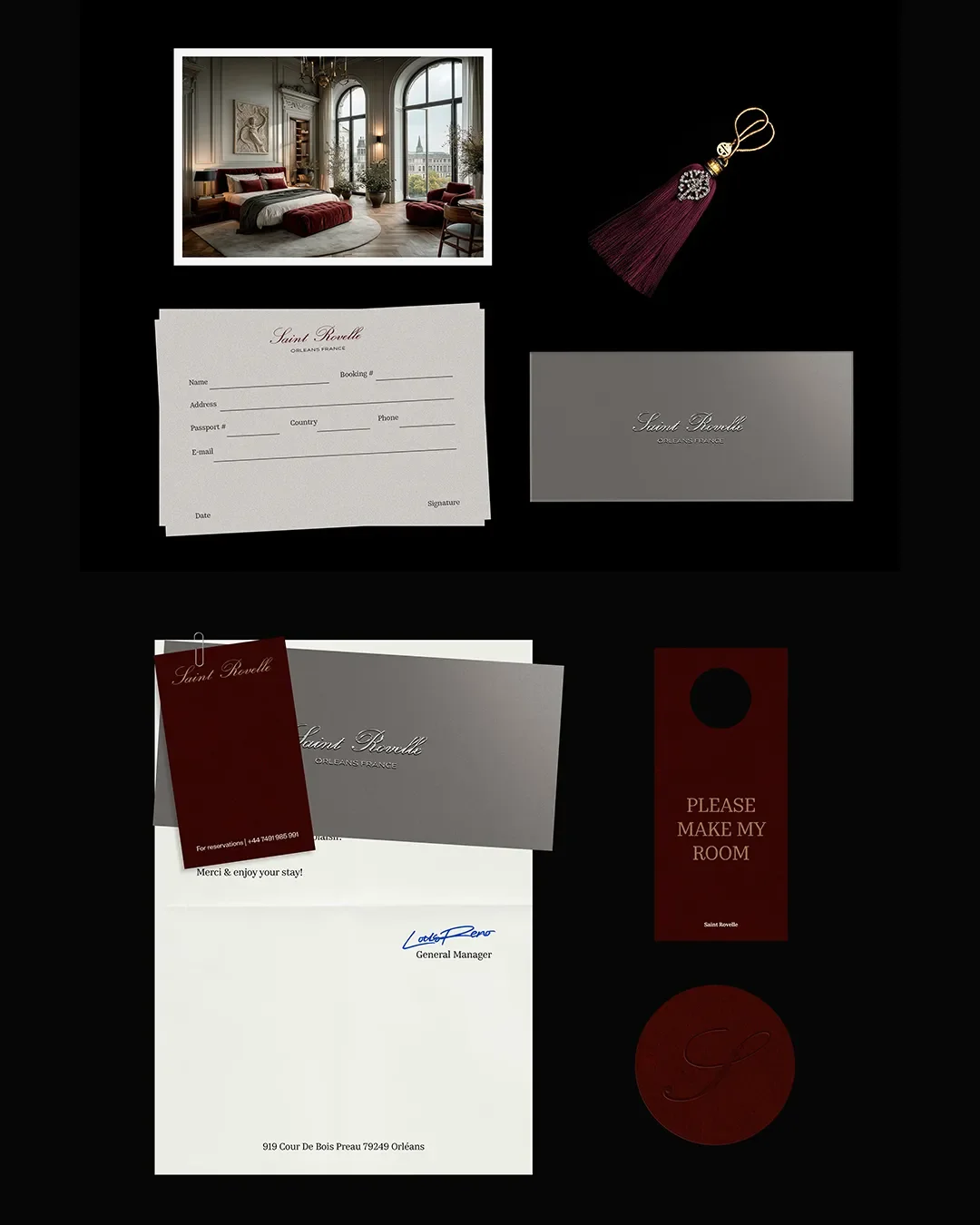
Hotel collateral is every printed piece a guest handles during a stay. That means key cards and sleeves, welcome cards, door hangers, menus, the room directory, stationery, bills, and small extras such as bag labels and matchbooks. Hospitality print design is the discipline of making these pieces behave as a family.
It sits one level below broad hotel touchpoint planning. A touchpoint map shows every place a guest meets the brand, including staff, signage and digital. Collateral design takes the physical pieces from that map and gives them shared rules for type, paper, voice and layout.
Why Guests Judge the Whole Stay by the Smallest Printed Thing
Guests cannot inspect your housekeeping standards or your staff training. They can read a menu. Printed pieces are the one part of the brand a guest holds slowly, alone, in a room they have paid for, so every typo, scuffed corner and mismatched typeface gets noticed. Consistent print reads as care, and guests tend to assume that care reaches the bed linen and the front desk too.
How can hotel collateral reinforce brand identity?
By repeating the same decisions on every piece. When the key card, the welcome note and the breakfast menu share a typeface, a paper feel, a way of speaking and one recognisable detail, the guest picks up the concept without being told what it is. Boutique hotel brand collateral works best when a guest could pull any single piece from a drawer and name the hotel it came from.
Build One Rulebook Before You Design a Single Piece
Every piece in the family follows the same six decisions. Settle these first and each individual design gets faster and better.
Type: two typefaces at most, with set sizes for headings, body copy and small print.
Paper: one or two stocks, chosen for how they feel in the hand.
Colour and ink: a short palette, plus rules for printing on dark or textured stock.
Voice: how the hotel speaks, from formal to dry to warm, applied to every line of copy.
Layout: margins, grid, and where the logo sits or stays quiet.
Signature detail: one repeatable touch, such as an edge colour, a foil mark, brand pattern or a corner shape.
What collateral does a boutique hotel need?
Most boutique hotels need nine core pieces. The table lists each one with its job and where exactly the guests see them.
| Piece | Job | Where the guest meets it |
|---|---|---|
| Key card and sleeve | Opens the door and sets the first impression | Front desk |
| Welcome card | Greets the guest personally | Room, on arrival |
| Room directory | Answers common questions | Desk or bedside |
| Door hangers | Signal privacy or service | Room door |
| In room menu and minibar list | Support ordering and spending | Room |
| Restaurant, bar and spa menus | Sell the offer | Dining and spa areas |
| Stationery | Lets guests write or make a request | Desk |
| Bill and folio | Closes the stay | Departure |
| Small details | Add memory | Throughout |
Key Cards: The First Object a Guest Holds
A key card lives in a pocket or wallet for the whole stay, which makes it the most handled piece of collateral in the hotel. Design both sides. The front can carry the mark and one strong graphic idea. The back can hold the hotel name, address and a phone number for the front desk.
Leave clear space for the chip or magnetic strip before you finalise artwork, and keep small type well away from it. Do not print the room number on the card, because a lost card would then point to a room. Write the number by hand on a sleeve instead, and use the sleeve to carry wifi details and one line of useful information. Paper and wood cards are now available in place of PVC, and they suit hotels that want the card to feel like part of the concept. A card that looks good often goes home in a bag, so treat it as a small keepsake that carries your name.
Menus: The Collateral That Changes Most Often
Hotel menu branding breaks down first, because dishes and prices change while the design stays fixed. Build each menu as a template with locked elements (header, type, margins, footer) and editable zones (items, prices, dates). The person updating the menu only touches the content areas, and the layout holds.
Keeping room service, bar and breakfast menus in one family
Give every menu the same structure, then add one small variable such as a band of colour or a change of paper tone. Staff and guests can tell the menus apart at a glance, and they still read as one hotel.
Spa menus and minibar lists
Spa menus need more white space than a food menu. Guests read treatment names, durations and prices slowly and want a calm page, so use lighter copy and a generous layout. The minibar list is the smallest piece in the family and the one most often left to a supplier's default design. Give it the same typeface and price formatting as the bar menu, and keep the type large enough to read in low light.
In Room Print: Directories, Notes and Cards Guests Actually Read
Welcome cards work when they are short and signed by a real person. Forty words from the general manager, with the guest's name on it, land better than a page of corporate greeting.
Room directories should hold only what guests ask for: wifi, breakfast hours, checkout time, spa and restaurant details, and the front desk number. If the directory grows past one page, move the rest to a QR link.
Door hangers are seen by every guest in the corridor, so they carry more brand weight than their size suggests. Keep the wording to a few words, use a sturdy board that hangs flat, and make both sides match the rest of the branding
Which hotel print pieces can be digital?
A simple rule helps. Print what a guest uses in the moment or might keep. Move to digital what changes often, runs long or involves booking. A QR hybrid combines the two: a printed card carries the essentials, and a QR code leads to the full live version.
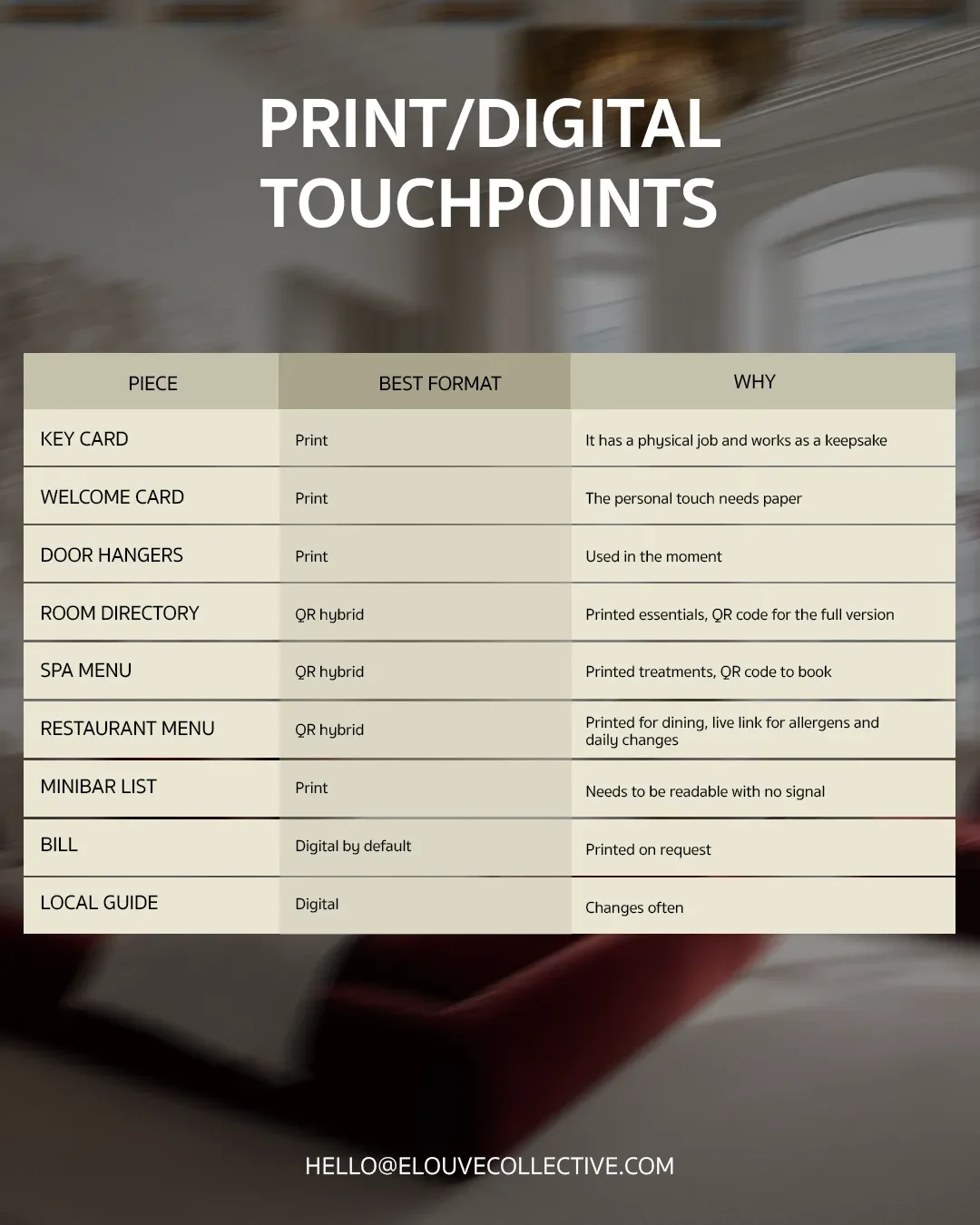
Put one line beside every QR code saying what it opens, and never make a code the only way to see a menu.
Bills, Stationery and the Quiet Pieces Most Hotels Forget
What should be included in hotel room stationery?
A well stocked desk holds a notepad, a pen, envelopes, a few sheets of letterhead, a postcard guests can send and a small request card. Hotel stationery design follows the same rulebook as everything else, with uncoated paper that takes ink without smudging.
Bills and folios are printed by the property management system, which limits what you can control. Ask the software vendor which fonts, logo formats and header options they support, then design a header that fits those limits. The bill is the last thing a guest reads, and it is often the piece that looks least like the hotel.
The Small Details Guests Photograph and Remember
Bag labels, matchbooks, coasters, amenity labels and a handwritten line on a turndown card all add memory at a low cost per piece. Each one needs a reason to exist. One signature detail repeated across five pieces does more than ten different extras, and every additional item adds storage, stock counts and reprint work.
Paper, Finish and Production Choices That Survive Daily Use
Match the stock to the job. These are typical ranges to discuss with your printer.
Key cards and sleeves: sturdy card with a finish that resists wallet wear.
Welcome cards and door hangers: 300 to 350 gsm board, uncoated or with a soft touch coating.
Menus: 250 to 300 gsm, with a sealed or wipeable surface for dining areas, or a plan to reprint often.
Stationery: uncoated writing paper at around 100 to 120 gsm.
Spa menus: heavier, softer stock, since guests hold these longer.
Foil and embossing suit welcome cards and key sleeves, which are handled gently. Skip them on menus that get wiped down or passed between many guests. FSC certified and recycled stocks are widely available, and a small line on the back lets guests see the choice. Always request a printed proof on the actual stock, because screens show colour and contrast differently from paper, especially on dark stocks.
Template Governance: Keeping the Family Consistent After Opening
Most collateral drifts in the first year, when different staff and suppliers make small changes. Template governance stops that from happening.
Name one owner for brand files, such as the general manager or marketing lead.
Store locked master templates with the fonts and a one page rulebook.
Put a version date in the footer of each file so everyone knows what is current.
Send printers a standing brief with stock, finish and colour references.
Set a count per room for each piece so stock is reordered before it runs out.
Plan reprints around lead times. Specialty finishes typically take several weeks, so order before stock runs low. Avoid printing a large run of anything that will change soon, such as menus with seasonal dishes.
Audit Your Collateral Family Before You Print
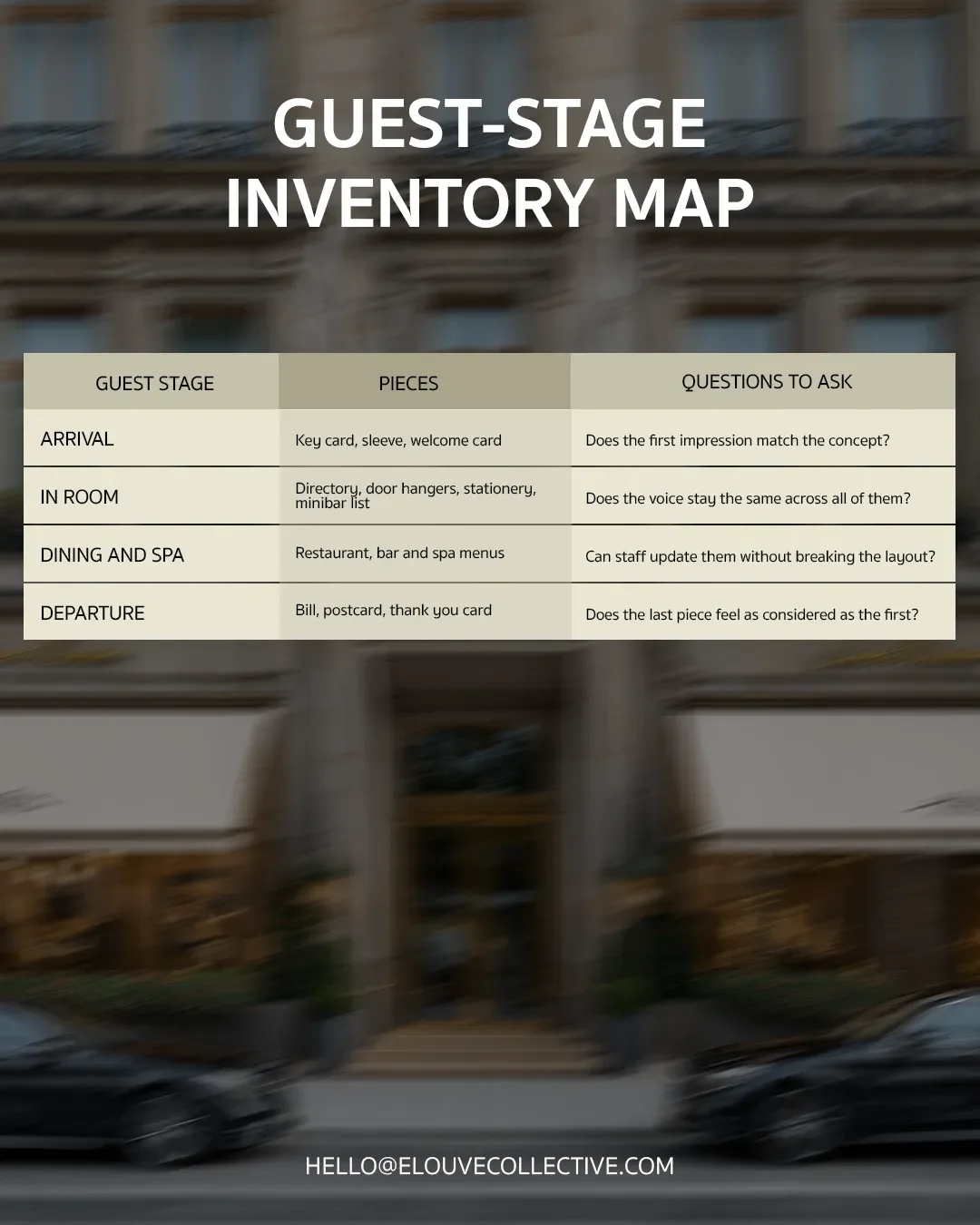
Lay every piece on one table and step back. Anything that looks like it belongs to another hotel is your first fix. Then check each guest stage for gaps.
Common Collateral Mistakes in Hotels
Each piece designed alone. Different suppliers produce pieces that do not match. Use one rulebook and one lead designer.
Menus with no room for change. The layout breaks at the first price update. Build templates with editable zones.
Small type on dark paper. It looks elegant on a studio screen and unreadable under a bedside lamp. Test in room lighting.
A QR code as the only route. Guests with no signal or no phone get nothing. Print the essentials.
Printing too much too early. Opening day copy often changes within a month. Order a first run you can afford to replace.
FAQs: Hotel Collateral Design
What is hotel collateral design?
It is the design of every printed piece a guest handles during a stay, built from one set of rules so the pieces look and read like the same hotel. It covers key cards, menus, in room print, stationery, bills and small details.
How long does it take to produce hotel collateral?
Allow roughly two to three months from rulebook to delivered stock for a full family. Custom key cards and specialty finishes take longer, so start before construction finishes where you can.
How often should hotel collateral be updated?
Menus and local guides change as often as the offer does. Key cards, welcome cards and stationery can stay in use for years when the rulebook is sound. Review the full set once a year.
Should a small hotel use a designer or printer templates?
Printer templates produce pieces that look like those of thousands of other hotels. A designer builds a rulebook around your concept once, and every later piece follows it.
Where to Start
Begin with an inventory of every printed piece a guest touches. Write the rulebook next, then audit what already exists against it. Elouvé Collective designs hospitality brand systems from London, Sydney and Miami, including the physical collateral that carries a concept into the room.
Design every guest touchpoint intentionally. Get in touch to plan your hotel collateral family.
