
After launch, measure whether customers understand the offer, find products easily and respond to the new brand across sales and touchpoints. Early evidence should guide operational fixes first; major identity changes need a clear pattern of data, not isolated reactions.
Four weeks after launch, sales are slower than you hoped. The urge to redesign arrives fast.
Acting on that urge is the real risk. A redesign costs money, resets the recognition you have only just started to build, and often fixes nothing, because the problem sat somewhere else. This guide covers which signals to track after a beauty brand launch, how long to wait before reading them, and how to tell a branding problem from every other kind. It is written for beauty founders who already have customers. If you are preparing for a future rollout or want to double-check your initial rollout assets, reviewing our comprehensive beauty brand launch checklist ensures your operational foundations are secure. This article picks up once the decision is made and looks at what to change.
Slow Early Sales Are Rarely a Branding Problem
Launch results depend on a long chain of events. Someone sees an ad, the ad makes a promise, the page loads, the description answers the first questions a buyer has, the price sits next to a competitor's, and the parcel arrives intact. Identity is one link in that chain, and it is usually not the weakest one.
Branding gets blamed first for two reasons. It is the most visible part of the business, so it is the first thing you judge when results disappoint. It is also the easiest part to picture changing. Nobody can redesign a supplier's lead time over a weekend, but a new label feels within reach.
Founders who skip the diagnosis often spend a rebrand budget and then see the same conversion rate, because the product page still has thin copy and the ads still promise results the formula takes eight weeks to deliver. Looking at the evidence first protects the budget and the recognition you have already built. Running your metrics through a structured premium brand audit checklist will help you pinpoint whether your sales slump stems from minor execution drift or actual strategic gaps.
Give the Launch a Fair Reading Window Before You Judge It
The first two weeks are mostly noise. Friends, family and existing followers buy first. Launch discounts pull demand forward. A press mention or influencer post creates a spike that fades. None of that shows how a stranger who finds the brand cold will behave.
Read the data in three windows:
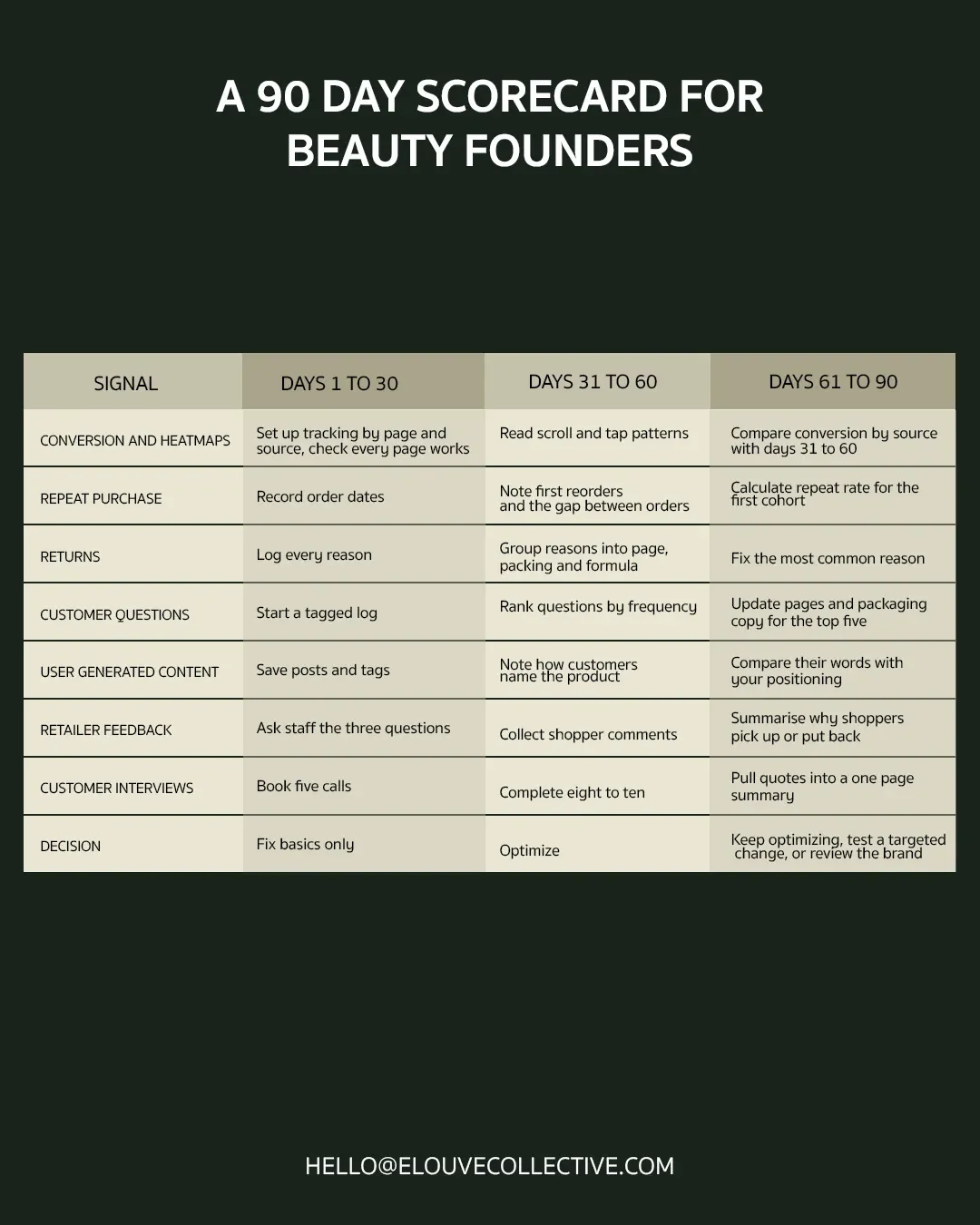
Days 1 to 30: confirm the basics work. Orders process, pages load and ads reach the right people. Judge nothing about the identity yet.
Days 31 to 60: first repeat purchases and the first honest customer feedback arrive. Patterns start to form.
Days 61 to 90: you have enough evidence to see whether the same problem shows up in more than one place.
Sample size caution. Small numbers mislead. A product page with 60 visitors and 3 orders converts at 5%. One more order makes it 6.7%. That swing comes from a single customer, so it says nothing about the brand. As a rough guide, wait until a page has a few hundred visitors before you read its conversion rate, and give repeat purchase at least one full product cycle plus time to reorder. A 30 day serum needs more than 30 days.
This table separates early noise from signals worth keeping:
| Early noise | Signal worth keeping |
|---|---|
| A sales spike in launch week | Steady orders from people you do not know |
| Strong results from friends and followers | Conversion from cold traffic |
| Praise in comments and DMs | Repeat orders and reviews that mention results |
| One customer who dislikes the packaging | The same packaging comment from several customers |
| One day of unusually high or low conversion | A trend across several weeks |
The Signals Worth Measuring After a Beauty Launch
A skincare brand should track seven things in the first 90 days: conversion, repeat purchase, returns, customer questions, user generated content, retailer feedback and customer interviews. Together they show whether people understand the brand, trust it and come back. The same list works for haircare, body care and cosmetics. Evaluating these data patterns over a full product lifecycle prevents premature aesthetic pivots and ensures you only invest in an overhaul when your skincare rebrand readiness data explicitly demands it.
Conversion and heatmaps
Track conversion on each product page by traffic source, because paid, organic and email visitors behave differently. Then add a heatmap and session recording tool such as Microsoft Clarity or Hotjar. Heatmaps show where people scroll, tap and stop. If most visitors never reach the ingredient list or the price, the page structure needs work. If they see everything and still leave, look at the offer and the promise.
Repeat purchase
Measure the share of customers who order a second time and the number of days between orders. Compare that gap to how long the product lasts. A low repeat rate often comes from product size, missing usage guidance or the absence of a replenishment email, so check those before you question the identity.
Returns and refunds
Log the reason for every return. Not as described points to a page or pack that set the wrong expectation. Arrived damaged points to packing or components. Did not like the texture or scent belongs to the formula. Only the first group can connect to branding.
Customer questions
Every repeated question marks a spot where the brand failed to explain itself. Collect them from support email, DMs, live chat and comments, then tag each one: ingredients, skin type, how to use, results timing, price or shipping. If twenty people ask whether a product suits sensitive skin, the front of pack and the product page are missing a line.
User generated content
Look at what customers photograph and how they describe the product. Do they show the packaging? Do they name the category correctly? Do their captions sound like your positioning? Unprompted content is the cleanest read on how the brand lands, and a lack of it is information too.
Retailer feedback
If you sell through stockists, ask buyers and shop staff three questions: what do shoppers ask about, what makes them pick the product up, and what makes them put it back. Retail feedback shows how the brand reads on a shelf beside competitors, which your online data cannot show.
Customer interviews
Speak to eight to ten customers, a mix of repeat buyers and people who bought once. Fifteen minutes each is enough. Ask how they found the brand, what they expected, how they would describe it to a friend, and what almost stopped them buying. Their words often explain what the numbers only hint at.
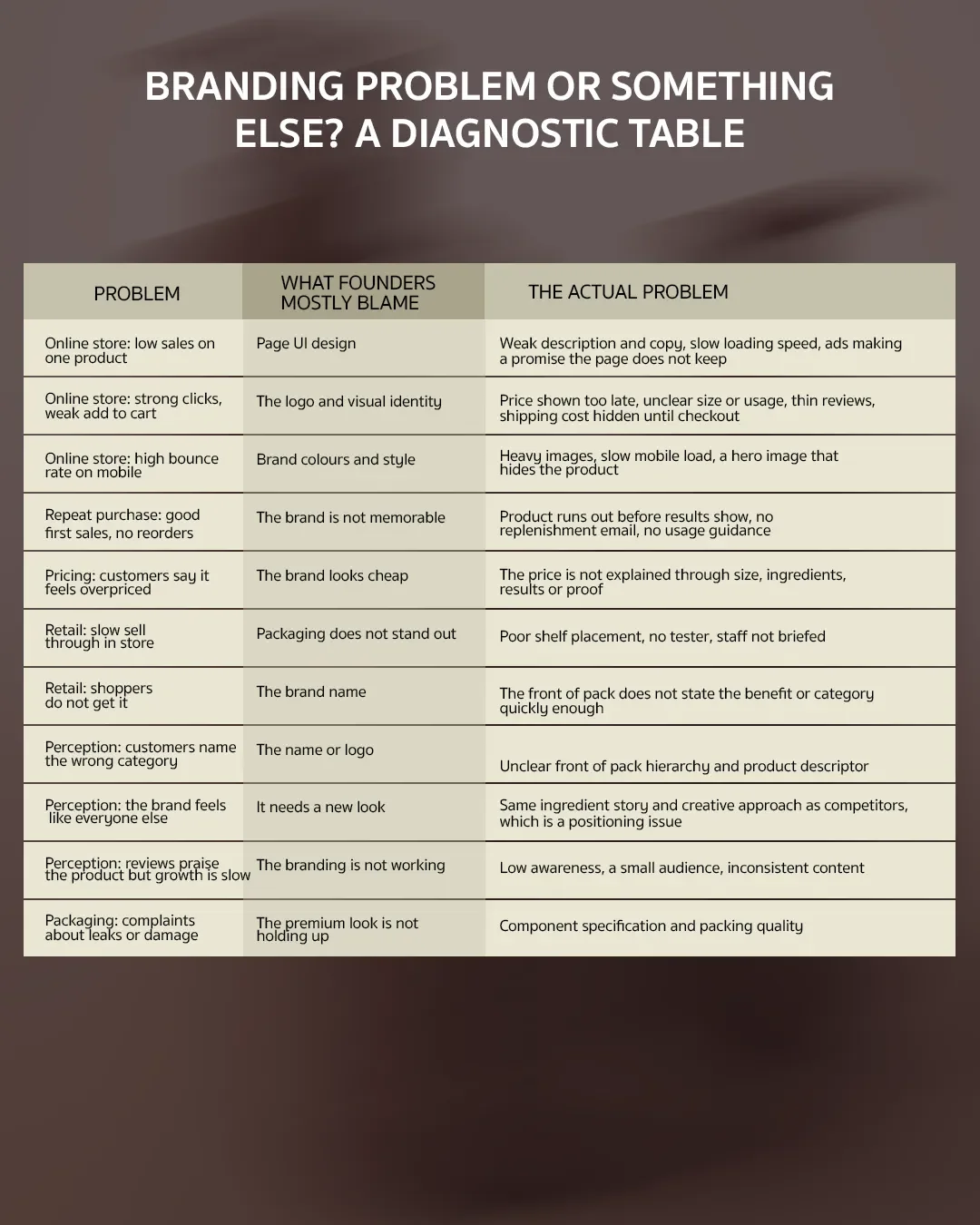
Branding Problem or Something Else? A Diagnostic Table
Before any conversation about the identity, match what you see to its most likely cause. The right column is where most of these problems turn out to sit.
Fix These Before You Touch the Identity
Cheaper, faster fixes usually move results first. Work through them in this order:
Product page copy. Say who the product is for, what it does, how to use it and when results show.
Photography. Show texture, size and the product in use.
Pricing and bundles. Make the starter size and the best value option obvious.
Shipping clarity. State cost and delivery time before checkout.
Packaging function. Fix leaks, damage and an awkward opening experience.
The first email. Order confirmation and welcome emails set expectations and can carry usage guidance.
Your marketing strategy and funnel
Change one thing at a time where you can, and note the date. That way you can see what moved the numbers.
When the Evidence Does Point to the Branding
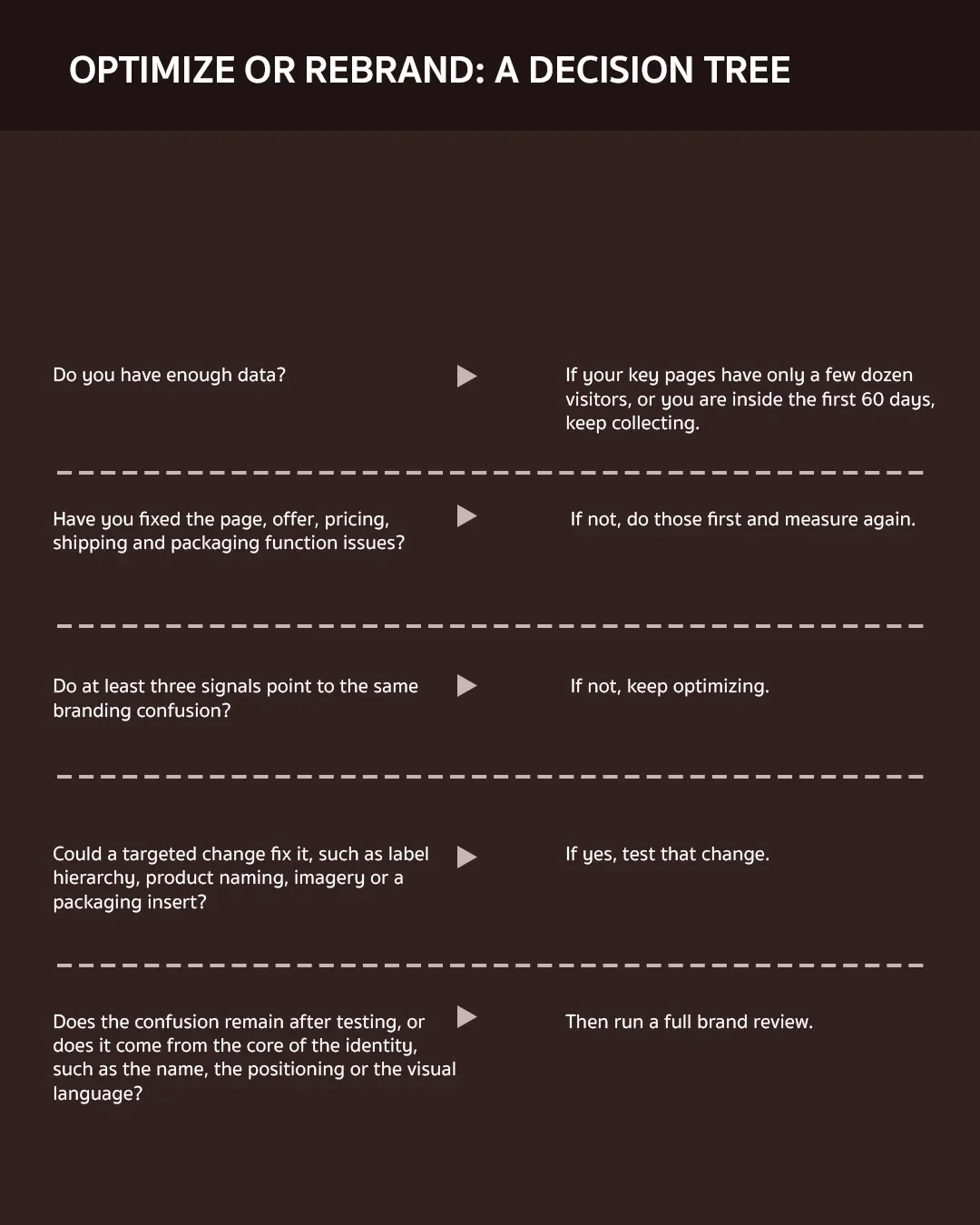
Consider a branding change when at least three independent signals point to the same confusion, after the fixes above and with enough data behind them. Typical patterns look like this:
Customers misread the price tier or category in reviews, interviews and questions.
Retailers say shoppers cannot place the brand on the shelf.
Placed beside two competitors, your packaging and page look interchangeable to people outside your team.
The identity changes from touchpoint to touchpoint, so packaging, site, social and inserts look like different brands.
Two signals mean keep watching. Three or more, with the cheaper fixes already done, justify a proper review.
Optimize or Rebrand: A Decision Tree
Work through these questions in order and stop at the first answer that applies.
How to Test Branding Changes Without a Full Redesign
Small, targeted adjustments give you data without resetting the brand. Good candidates are hero imagery, label hierarchy (moving the main benefit up the front of pack), product names and descriptors, colour accents, packaging inserts and the tone of the copy. Keep the logo, palette and typeface stable so you can read the results. Run each test for several weeks, long enough to collect a reasonable sample, and compare it with the period before.
A 90 Day Scorecard for Beauty Founders
Copy this into a spreadsheet and fill it in at day 30, 60 and 90.
FAQs
How do you know if beauty branding is working?
Branding is working when strangers describe the brand the way you intended, convert at a steady rate from cold traffic, and come back to reorder. Reviews that mention both the product result and the feel of the brand are a good sign. Track conversion, repeat purchase, customer language and retailer feedback together, because any one of them alone can mislead.
What should a skincare brand measure after launch?
Measure conversion by page and source, repeat purchase, return reasons, customer questions, user generated content, retailer feedback and what customers say in interviews. Log them from day one and review at 30, 60 and 90 days.
When should a new brand change its packaging?
Fix packaging straight away when it fails in use, for example leaks, damage or a pack that is hard to open. Change the design when several customers or retailers misread the category, price tier or benefit, and smaller fixes such as label hierarchy have already been tested. One complaint is not enough.
How long should you wait before rebranding?
Wait for at least 90 days of data and one full repeat purchase cycle for your product. Many brands need longer, because early sales come from friends and existing followers. Rebrand sooner only when the identity cannot be used, such as a trademark conflict with the name.
Review Your Brand With Evidence
If you have 90 days of data and still cannot tell whether the branding is the issue, Elouvé Collective can go through it with you. We review your scorecard, product pages, packaging and customer feedback, then tell you what to optimize, what to test and whether a rebrand is justified.
Review your brand with evidence.
