
Fragrance identity translates an invisible sensory experience into a brand world people can recognise before they smell the product. Positioning, naming, narrative, typography, colour, imagery and packaging should express the same emotional territory without relying on vague luxury codes.
Navigating these sensory elements requires an intimate understanding of premium market dynamics, which is why working with a specialized luxury branding agency can help you ground these artistic decisions in a clear commercial strategy. A fragrance cannot be photographed. It cannot be shown on a website, a shelf or a social post, and most people form an opinion about it before they ever smell it. They see the bottle, read the name, scan the description and decide whether the scent sounds like them.
That makes fragrance brand identity a translation job. The scent has to be turned into colour, shape, material, language and ritual, so a stranger can imagine the smell from everything around it.
This guide is for fragrance founders building a brand around one scent or a range of scents. It covers brand story and positioning, olfactory families, mood, bottle silhouettes, sensory cues, scent naming and the luxury clichés that make perfume brands look the same.
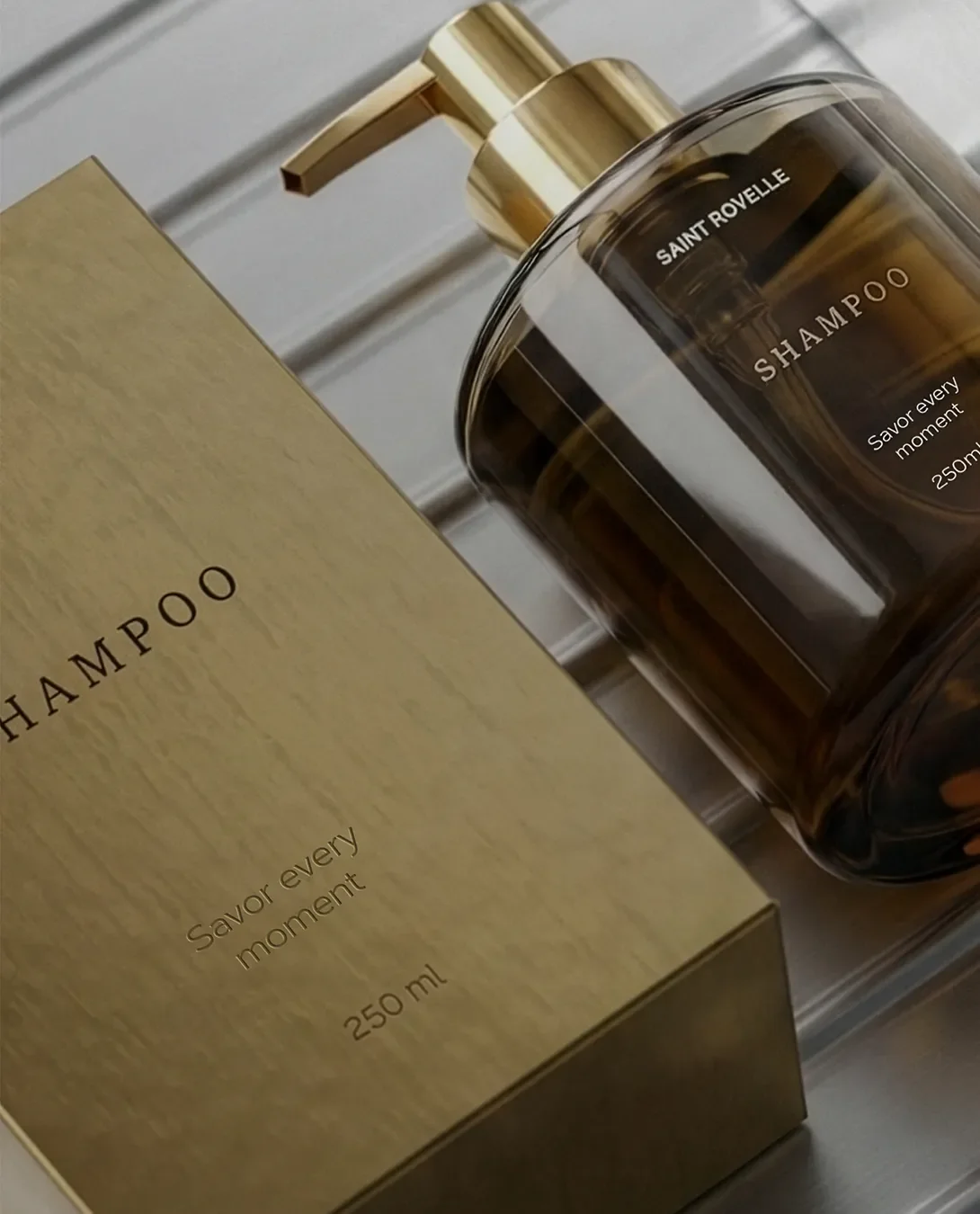
Why Fragrance Branding Works Differently From Other Beauty Branding
Skincare can show texture, results and an ingredient list. Fragrance has none of that to lean on. The product is invisible, and the purchase rests on emotion, memory and association.
Many purchases happen before the customer has smelled anything. Online orders, gifts and travel retail all involve decisions made without a clear sense of the scent. The brand has to fill that gap.
Packaging works as a prediction. A heavy glass bottle with a dark cap tells people the scent will be rich and warm. A pale, light bottle suggests something clean and airy. When the prediction is wrong, the customer feels the mismatch the moment they spray.
Fragrance is worn as a personal signal. People choose a perfume partly for what it says about them, so the identity needs a mood, a place or a person that the wearer wants to be associated with.
How to Create a Fragrance Brand Identity
A fragrance brand identity is the system of visual and verbal choices that tells people what a brand and its scents are like before they smell anything. It works in two layers. The brand layer holds the story, positioning and a system that can carry several scents. The scent layer gives each fragrance its own concept, look, name and description inside that system.
How do you create a fragrance brand identity?
Start with the brand story and positioning, build a brand system that can hold more than one scent, then develop each fragrance in the range inside that system.
In practice the work follows six steps:
Write the brand story and set the positioning.
Build the brand system: logo, typography, palette, bottle silhouette, naming logic and voice.
Plan the range: how many scents, how they relate and which one leads.
Define the concept, olfactory family and mood of each scent.
Translate each scent into colour, material, name and description inside the system.
Plan sensory discovery so customers can meet the whole range.
What should a perfume identity include?
A perfume identity should include elements at two levels.
Brand level: story, positioning, logo, typeface, colour palette, bottle silhouette, packaging structure, naming logic and tone of voice.
Scent level: scent concept, olfactory family and mood, name, description, colour accent, label detail and imagery.
How to Build a Fragrance Brand Story and Positioning
The brand story is the reason the brand exists and its point of view on scent. It decides which scents belong in the range and how they should feel. A story can come from a place, a craft, a memory or a belief about how fragrance should be worn, and it needs to be specific enough that you can tell whether a scent fits.
Positioning places the brand among other fragrance brands. Decide four things:
Who it is for: the person who wears it and the moment they wear it.
Where it sits: niche, designer, artisan, clean or luxury, with the price tier that goes with it.
Its scent territory: the families, moods or ingredients that run through the range.
What it says about the wearer: the signal someone sends by choosing it.
Founders often begin with a scent they love and a bottle they like. That works until the second scent arrives and nothing connects the two. A clear story and position give every later decision something to be checked against.
How to Build a Brand System That Holds Several Scents
A brand system is the set of shared rules that makes different scents feel like one brand while leaving room for each to look and sound different. Decide early what stays fixed and what changes with each fragrance.
| Element | Fixed across the range | Changes with each scent |
|---|---|---|
| Logo and type | Logo, main typeface, layout grid | Style of the scent name |
| Colour | Core palette | Accent colour |
| Bottle and cap | Silhouette, cap, base | Glass tint or cap finish |
| Packaging | Box structure and material | Print colour, label detail |
| Naming | Naming logic | The name itself |
| Voice | Tone and vocabulary | Mood line and notes |
| Imagery | Photography style | Subject and setting |
A useful test is to place three scents on one shelf. They should read as one brand at a glance, and a customer should still tell them apart from across the room. Build the system with a range in mind even if you launch with one scent.
How to Define a Scent Concept for Each Fragrance in the Range
With the brand set, each fragrance gets its own scent concept: one clear idea such as a place, a memory, a mood or a person. It might be a salt marsh at dawn, a wardrobe full of old coats, or the hour after a dinner party ends. The concept belongs to the brand story and gives the scent its own identity inside the system.
The concept should come from the perfumer's brief. A mood board made first can send the identity somewhere the scent never goes, because perfumers build a fragrance from raw materials and structure rather than pictures.
Three pieces of fragrance vocabulary help here.
Olfactory families. Fragrances are commonly grouped into floral, amber (warm, sweet, spiced or resinous), woody and fresh (citrus, green and aquatic). Chypre, fougère and gourmand are familiar styles within or across those groups.
Notes. Top notes are the first impression and fade within minutes. Heart notes form the main character. Base notes linger for hours.
Mood. Mood is the feeling the wearer gets: calm, bold, intimate, playful, solitary or social.
Think about how the scents relate. A hero scent often leads, with companions in other families and moods, such as a fresh scent for daytime and a warm amber for evening. Two scents with the same family and mood compete on the shelf and in the discovery set.
How to Translate Scent Notes Into Colour, Material and Typography
Each scent is translated inside the brand system, so the fixed elements stay in place and the accent colour, finish and imagery carry the scent. The trap to watch for is literal translation, where a lemon note becomes a lemon on the label. A stronger approach translates the quality of the note. Lemon means brightness, sharpness and sparkle, which can show up as pale yellow, crisp type and clear glass. Our guide to luxury brand typography covers how to select letterforms and adjust letter-spacing to project these exact emotional signals onto your printed labels.
Categories also carry cues that customers already read. Aquatic fragrances tend to sit in sea green and blue. Intense and sporty fragrances lean on red, black and metallic finishes. Following these cues helps people understand a scent quickly, and breaking them can make a brand memorable when the concept supports the choice.
The scent to brand matrix below is a starting point. Pick the closest row, then adjust for mood and concept.
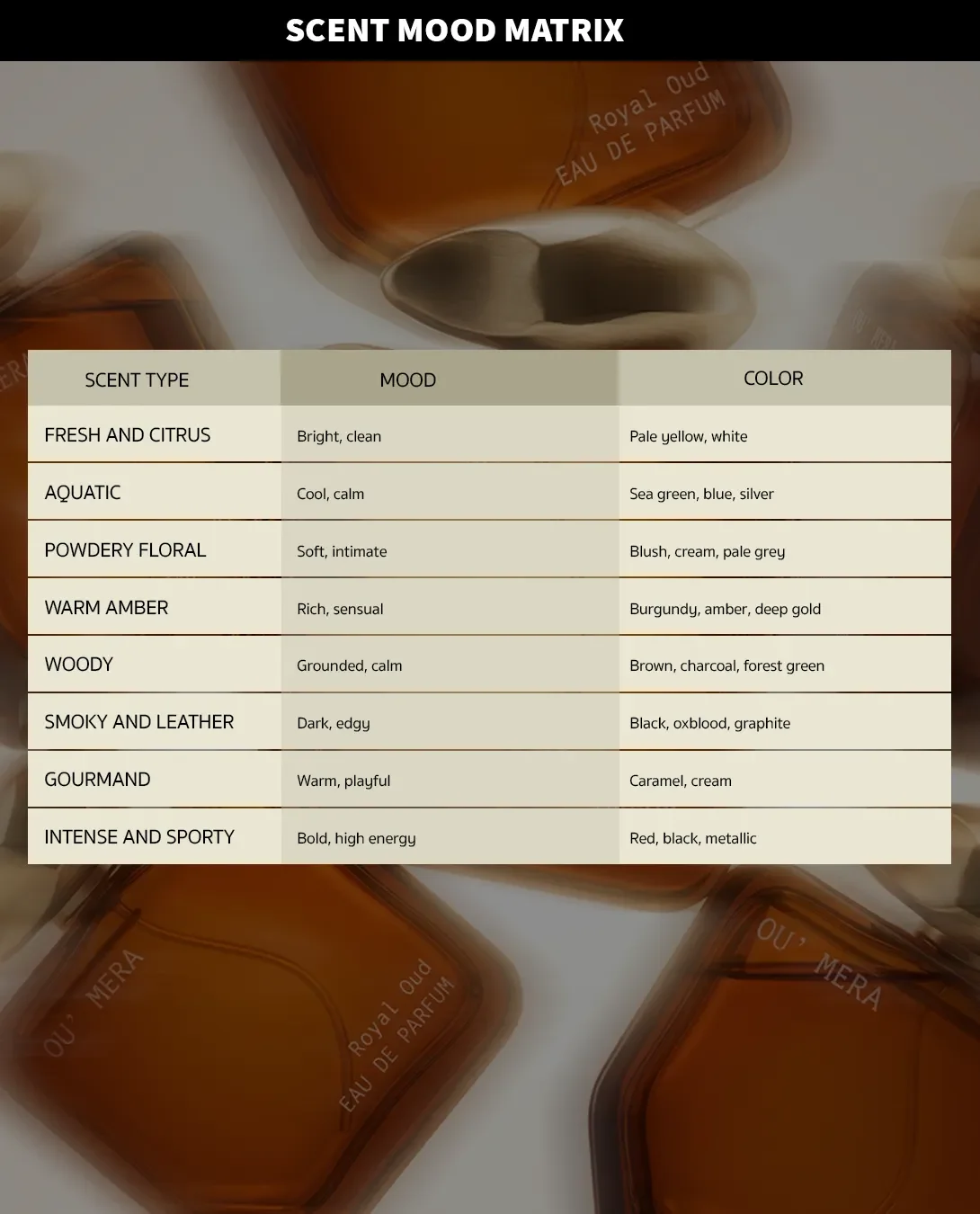
Test the result against the liquid. If the scent and the packaging disagree, customers will notice.
How to Design a Fragrance Bottle and Packaging That Fits the Scent
How can packaging communicate scent?
Packaging communicates scent through shape, weight, colour, material, finish and the way the box opens. Each gives people a physical impression of what the fragrance will smell like, so all of them need to agree with the scent concept.
Bottle silhouettes carry the clearest signals:
Tall and slim bottles feel modern and clean.
Round or sculptural bottles feel soft and sensual.
Heavy rectangular blocks feel classic and confident.
Apothecary style bottles feel crafted and botanical.
Thick glass suggests depth and richness, and thinner glass suggests freshness. Metal, wood, resin and stone effect caps each shift the mood, and the sound of a magnetic cap closing becomes part of the experience. For a range, share the silhouette, cap and box structure and vary the glass tint, print colour and label detail. The range then reads as one family, and shared moulds and tooling keep production simpler.
| Touchpoint | What it signals about the scent | Decisions to make |
|---|---|---|
| Bottle silhouette | Character and mood | Shape, proportions, feel in the hand |
| Glass | Richness or freshness | Thickness, tint, base weight |
| Cap | Quality, first touch | Material, shape, weight, closing sound |
| Label or print | Name, family, tone | Typeface, placement, wording |
| Outer box | First impression at unboxing | Structure, board, finish |
| Sample vial | First contact for many customers | Label, packaging, matching identity |
Three production points founders tend to miss:
Custom glass moulds can take months and often need minimum orders in the thousands. Stock bottles ship faster and allow smaller runs, and can be customised through cap, finish and print.
Bottle, pump and cap need matching neck finishes. Test the spray, the fit and the fragrance in the chosen bottle and cap before committing to a run.
Brand colours print differently on glass, metal and paper. Check colour on the real bottle.
How to Name a Fragrance Range and Describe Each Scent
A fragrance name often does more work than any other word on the pack, because customers have no smell to go on. For a range, the name needs a logic that can carry future scents.
Common naming routes include:
Place or moment: Maison Margiela Replica uses names such as By the Fireplace and Jazz Club.
Ingredient: Jo Malone London names scents after their notes, such as Lime Basil and Mandarin.
Number or code: Chanel No 5 and Le Labo's Santal 33.
Invented word: this gives full control, and the story has to supply the meaning.
Before you commit, say the name aloud in the sentence I am wearing followed by the name, and make sure it does not promise a note the scent lacks. Search trademarks in Class 3, which covers perfumery, in each market you sell in, and check domains and social handles.
How to describe a scent so people can imagine it
Use three layers: a mood line, a plain description and the notes in order. For example: A quiet morning on a salt marsh. Cool and mineral with a green edge that warms into soft cedar. Bergamot and sea salt on top, sage and iris at the heart, cedarwood and musk at the base. Keep to simple sensory words such as cool, dry, warm and smooth, in the same tone across the website and sample cards.
How to Design Sensory Discovery for People Who Cannot Smell Online
Sensory discovery is the set of materials and cues that help a customer decide, and it is where brand identity meets conversion. Opened perfume is usually hard to return, so a way to try before buying lowers the risk.
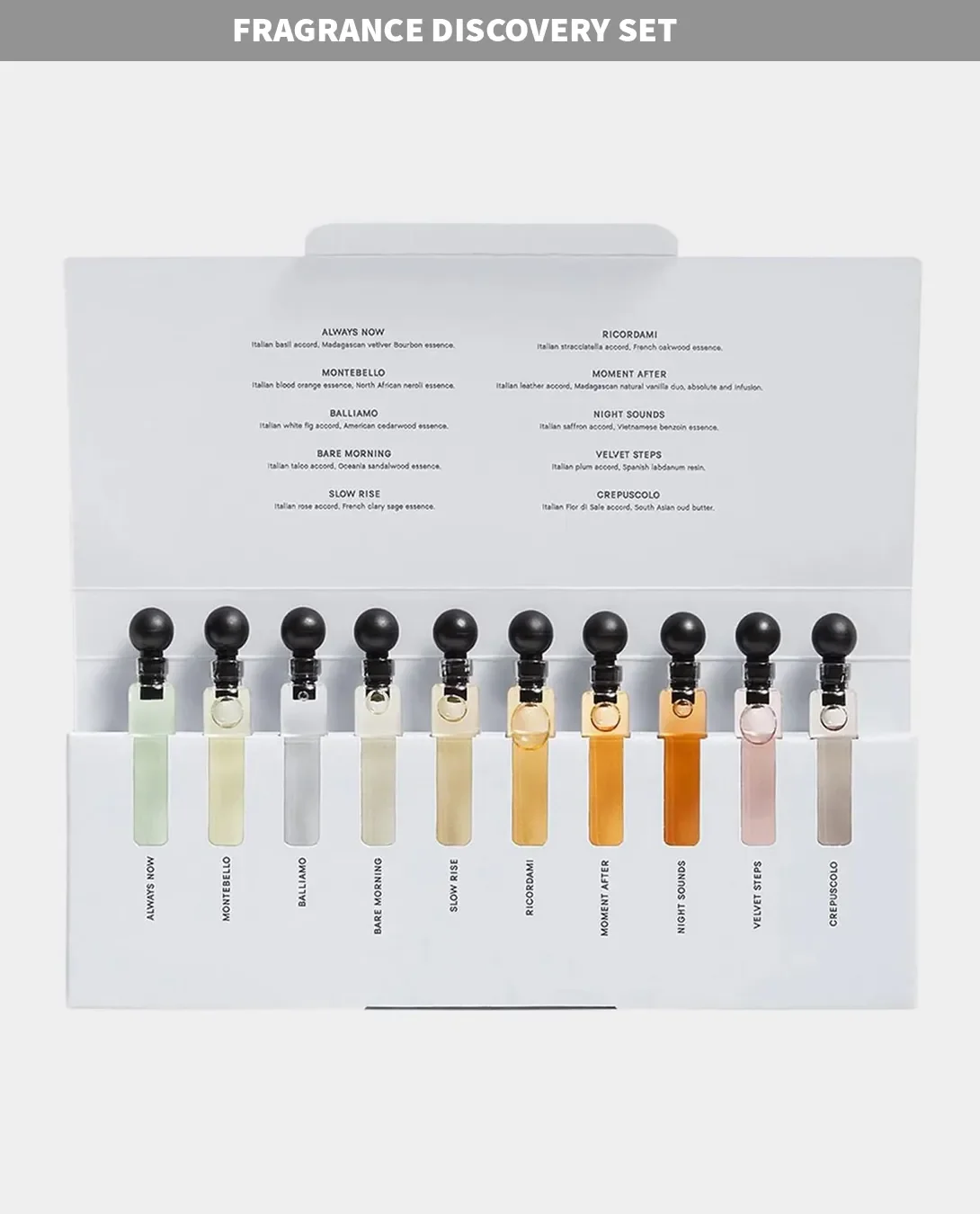
Discovery sets and minis. A set of three to five small vials lets customers try the range at their own pace and meet the brand as a whole. Package it in the same visual world as the full bottles, with a card for each scent.
Scent cards and sample packaging. A scented card in an order gives people something to smell while they are paying attention. Sample vials are often the first physical contact, so label and type should match the full size.
Product page copy. Include the mood line, olfactory family, notes in order, when the scent suits and how long it tends to last on skin. A short guide to testing helps: spray on skin and wait a few hours for the dry down.
Sensory cues beyond smell. The grain of the box, the weight of the bottle in the hand and the click of the cap all shape how a scent is perceived, and they should agree with the scent.
Luxury Fragrance Branding Clichés and Mistakes to Avoid
Luxury fragrance has a familiar visual language that appears across many brands at once. These clichés signal luxury quickly but say little about the scent.
Black and gold packaging on every scent
Roses, swans and soft focus silhouettes
Copy built on words like intoxicating, seductive, timeless, ethereal and essence
A note list of fourteen ingredients that nobody can picture
When the concept points to a specific detail, use that detail. A mineral scent can take a stone effect cap, and a smoky scent a debossed dark label.
Mistakes that cost founders the most:
Building the brand around the first scent. The second scent will not fit and the look has to be rebuilt.
Literal translation. Putting the ingredient on the pack and expecting it to carry the scent.
A beautiful bottle with a vague story. The bottle earns attention and the story has nothing to say.
Copying niche perfume aesthetics. Minimal labels and typewriter fonts work when they come from a concept. Used as a look, they blend into the shelf.
Designing the identity before the scent is finished. If the formula changes, the visuals may no longer fit.
FAQs: Fragrance Branding
Should the bottle or the scent come first?
The scent. Start with the concept and the perfumer's brief, then design the bottle around the finished or nearly finished scent. Begin sourcing bottles once the concept is clear, since lead times are long.
How do you describe a scent in marketing?
Use three layers: a mood line, a plain description of how it smells and feels, and the notes in order. Choose simple sensory words and avoid vague luxury language.
How many scents should a new fragrance brand launch with?
Many founders launch with one to three. A smaller range keeps the story clear and limits stock and production cost, and a hero scent with one or two companions still makes a discovery set possible.
Build a Fragrance Brand World With Elouvé Collective
A fragrance brand world starts with the scent and reaches every point where a customer meets it: the name, the bottle, the box, the sample card, the product page and the words that describe the smell. Elouvé Collective works with beauty and lifestyle founders on brand strategy, visual identity and packaging design, and builds fragrance identities from the scent concept outward.
Build a fragrance brand world. Tell Elouvé Collective about your scent story and launch plans.
