How Hospitality Brand Identity Drives Reviews and Repeat Bookings
You might think that five star reviews come from a comfortable bed, friendly staff, a great location. And while none of that is wrong, it is incomplete. Because the guests who leave glowing reviews and come back a year later are not just responding to the quality of what they received. They are responding to how the whole experience made them feel, and that feeling is engineered long before anyone sets foot in the lobby.
That engineering has a name: hospitality brand identity. And understanding how it works is one of the most valuable things an independent property owner can do, not just for aesthetics, but for revenue, loyalty, and the kind of word of mouth that no advertising budget can replicate.
Why Guests Remember Experiences, Not Features
The hospitality industry has a tendency to sell features. Thread count, square footage, rainfall showers, proximity to the airport. That is the positioning of a property competing on convenience and value, and it is exactly what keeps guests comparing you to ten other options in ten open tabs, looking for whoever offers the most for the least.
The properties that break out of that cycle do something different. They sell an added layer of experience rather than a list of amenities, and that shift is what guests pay a premium for. The feeling of walking into a lobby that smells like something specific and calm. The moment they noticed that the menu font matched the packaging on the welcome amenity. The way the staff seemed to already understand what kind of guest they were before they asked for anything. These are not accidents. They are the result of a hospitality brand identity that has been thought through at every level.
Memory works through emotional connection, not amenities. Neuroscience has shown consistently that emotionally resonant experiences are encoded more deeply than neutral ones. A guest who felt something during their stay, curiosity, warmth, a sense of elevation, will remember that property. A guest who had a perfectly adequate stay in a well appointed room may not recall the name of the hotel six months later.
This is the gap that hospitality brand identity closes.
What Consistency in Hospitality Brand Identity Does to Guest Trust
Trust is built through repetition. When something looks, feels, and sounds the same across every interaction, the brain registers it as reliable. And reliability, in hospitality, translates directly into trust.
Consider what a guest experiences before they even arrive. They visit your website. They read your emails. They see your Instagram. They arrive at the property and encounter your signage, your reception space, your in room materials. If each of these touchpoints feels like it belongs to the same world, with a coherent visual language running through all of it, the guest gets immersed in something that feels intentional. That is not a small thing. That is the difference between a stay that feels designed and one that simply happens.
That feeling changes behavior. A guest who trusts a brand is more likely to upgrade. More likely to use ancillary services like the restaurant or spa. More likely to leave a review because the experience confirmed what the brand promised. And more likely to return because they know what they are getting, and they want it again.
Inconsistency does the opposite. When the warmth of an Instagram feed meets a cold and transactional check in process, or when the elegance of the branding collides with low quality printed menus, the guest notices the gap even if they cannot name it. That gap erodes confidence. And eroded confidence shows up in reviews as vague dissatisfaction, the kind that says it was fine but something was off, without being able to explain why. If you want to understand exactly what hotel brand guidelines should be doing to prevent that, it is worth reading before you brief anyone.
At Elouvé Collective, we build hospitality brands that hold together from the first digital impression to the last in room detail. If your property is ready for an identity that guests feel before they can explain it, explore our hospitality branding services and see what that process looks like.
The Touchpoints That Shape a Review Before the Guest Even Checks Out
Most hoteliers think reviews happen at the end of a stay. In reality, the review is being written in the guest's mind from the first interaction. Every touchpoint either adds to or subtracts from the overall impression, and by the time a guest opens Google or TripAdvisor, the outcome is already largely decided.
The booking experience sets the tone. A beautiful, well considered website that communicates the property's personality immediately tells the guest what kind of place this is. A clunky or generic booking flow does the opposite, and the gap between expectation and experience begins there.
The pre arrival email is often the most underused touchpoint in independent hospitality. A well crafted email that sounds like the brand, that anticipates rather than just informs, does significant emotional work before the guest has even packed their bag.
Arrival and first impressions carry disproportionate weight. Research on memory consistently shows that first and last moments in an experience are encoded most strongly, what psychologists call the peak end rule. The entrance, the greeting, the first sensory impression of the space: these shape the entire stay.
In room materials, from the welcome card to the breakfast menu to the do not disturb sign, are where brand identity either holds together or starts to fragment. Guests who notice these details are often the most engaged guests, and they are also the ones most likely to write detailed, enthusiastic reviews. This is exactly what hotel branding do this not that covers, the small decisions that compound into a guest's overall perception.
The departure experience, often an afterthought, is the last impression the guest carries with them as they begin composing their review in their head on the way to the airport.
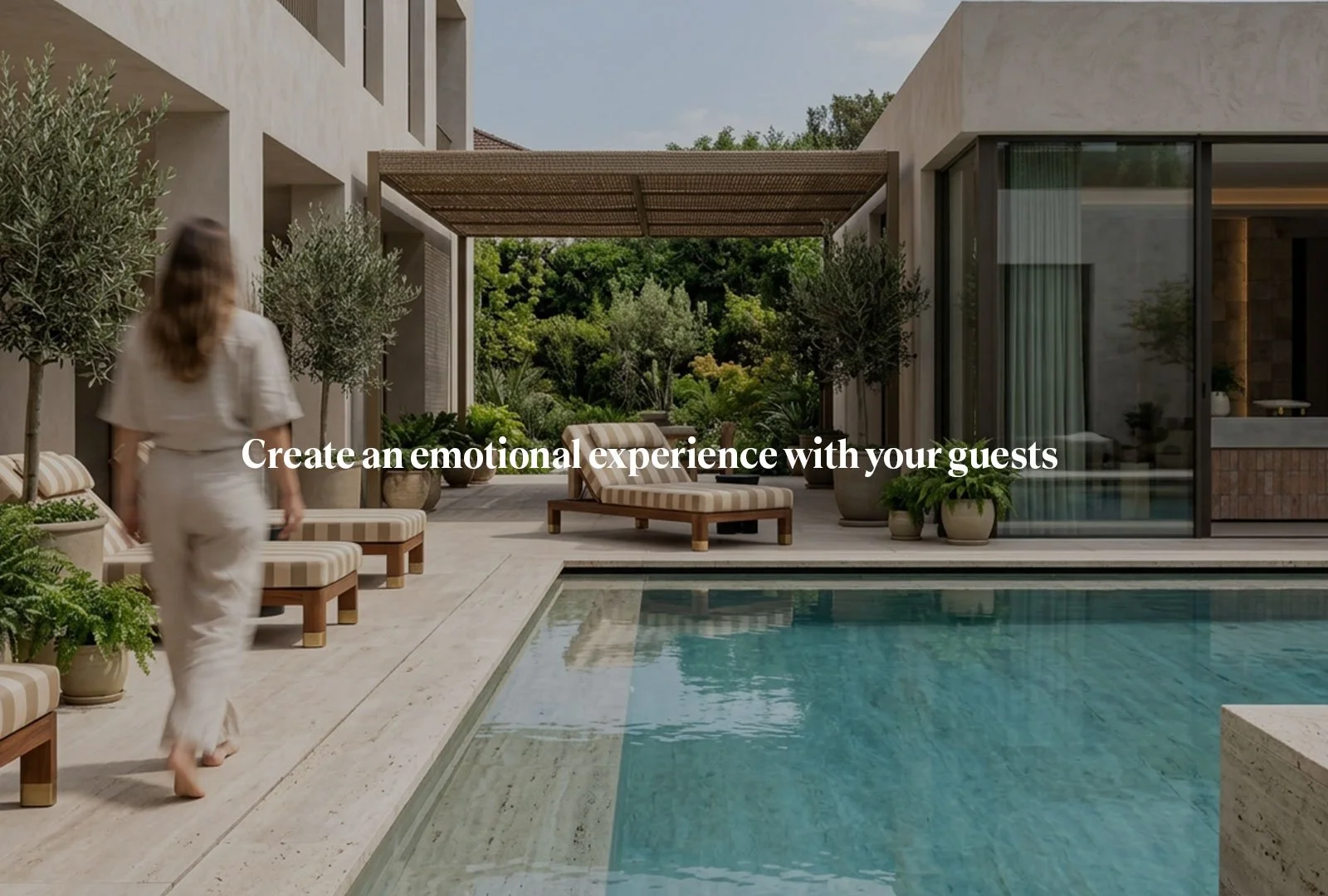
How Hospitality Brand Identity Turns First Time Guests Into Repeat Bookings
Repeat bookings are not just about satisfaction. Plenty of guests have a perfectly satisfying stay and never return, simply because nothing made the property feel irreplaceable. What drives return visits is something stronger than satisfaction: it is belonging.
When a hospitality brand identity is strong enough, guests begin to feel that staying there says something about who they are. The property becomes part of their identity, a place they return to because it reflects their taste, their values, or the version of themselves they enjoy being when they travel. This is why certain hotels develop almost cult followings despite not being the largest, newest, or most conveniently located option available.
Brand identity creates this feeling through accumulation. The more touchpoints that feel intentional and coherent, the more the guest feels that the property understands them. And being understood is one of the most powerful drivers of loyalty in any relationship, commercial or otherwise.
There is also a practical mechanism at work. A guest who has a memorable, identity rich experience has a clear mental reference point. When they are planning their next trip to the same city, or looking for the same kind of feeling elsewhere, that property comes to mind first. Strong brand identity creates what marketers call mental availability, the tendency to be thought of first when the need arises. For properties that are competing with larger chains, this is one of the most powerful advantages available, and it costs far less than a media budget.
At Elouvé Collective, we build hospitality brands that guests return to, not just because the stay was good, but because the identity made them feel seen. If that is the kind of brand you want to build, get in touch with our team and let us talk through your property.

Hospitality Brands That Built Loyal Followings Through Identity
The properties that have built the most devoted guest bases share one thing in common: they committed to a point of view and let it run through everything.
Amangiri in Utah built its identity around silence, landscape, and an almost geological sense of calm. The architecture, the materials, the palette, the pace of service: everything speaks the same language. Guests who connect with that identity do not just return, they plan trips around it. The brand has become a destination in itself, not a place to stay near something else.
The Hoxton built loyalty in a different direction entirely. Playful, neighbourhood rooted, deliberately informal, every Hoxton property is designed to feel like it belongs to the area it sits in rather than floating above it. The consistency is not visual repetition across locations but tonal consistency, the same irreverent, welcoming personality expressed through whatever the local context offers. That identity attracts a guest who values cultural immersion and trusts the brand to deliver it regardless of which city they are in.
Ace Hotel built an almost entirely word of mouth following in its early years by creating spaces that felt genuinely creative and community oriented at a time when most hotel design was aspirationally anonymous. The brand identity was rooted in a subculture, music, art, independent thinking, and it attracted guests who shared those values and felt seen by the space. Those guests became advocates before advocacy was even a marketing term.
What these properties share is not budget or scale. It is clarity. They knew exactly what they stood for and built every physical and sensory detail around that position. The loyalty followed because the identity gave guests something to be loyal to. If you are working with a branding partner for the first time, understandingwhat happens inside a hotel branding company can help you know what to expect from that process.
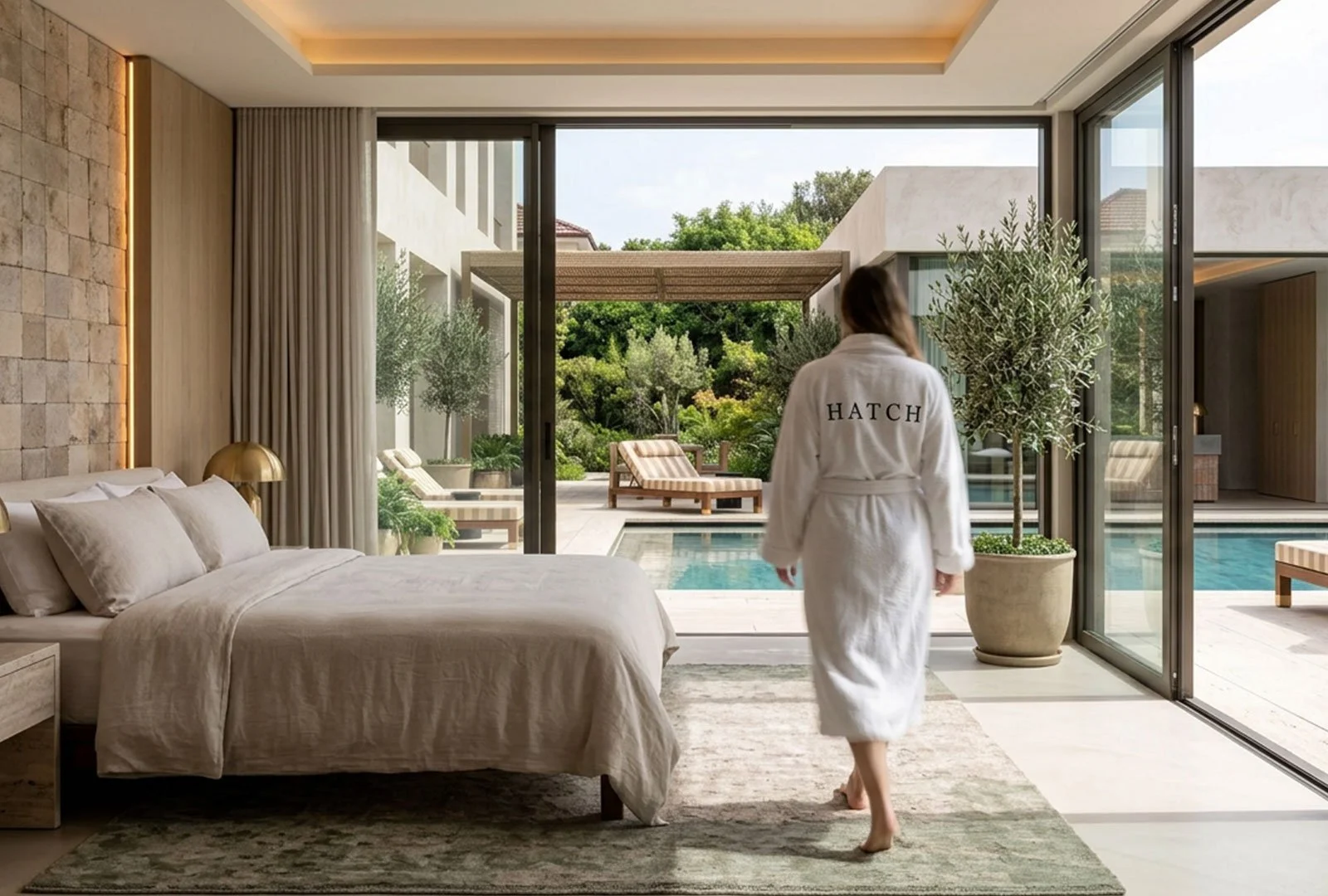
What This Means for Your Property
Whether you are preparing to open your first boutique property, or you have been running a hotel for a decade and something about the brand has never quite clicked, the work of building a clear hospitality brand identity is never really finished. It evolves as your property evolves. What matters is that it is intentional.
The most common misconception among property owners is that branding is a nice to have. It is not. Your brand identity gives guests a clarity of who you are, what your property stands for, and how that shows up in every room, every interaction, every piece of printed collateral. It is operational infrastructure. It makes everything else work better, from staff onboarding to pricing decisions to the way a guest describes your property to a friend.
A strong hospitality brand identity gives guests something to feel before they arrive, something to remember after they leave, and a reason to come back that has nothing to do with price. It closes the gap between what you promise and what you deliver, and that gap is exactly where trust either forms or breaks down.
The properties that command loyalty and premium rates are rarely the ones with the largest marketing budgets. They are the ones with the clearest sense of who they are, expressed with consistency across every touchpoint from the first Google search to the checkout email. That clarity is available to an independent boutique hotel just as much as it is to a celebrated international brand. The difference is simply the decision to pursue it deliberately.
If you are ready to build that foundation for your property, or to revisit an identity that no longer reflects where your brand has grown, our hospitality branding agency team at Elouvé Collective would love to hear about your property.
or just send us an email: hello@elouvecollective.com
Check out more from the blog here.
Follow along for more business tips and tricks on Instagram!