
Beauty brand architecture defines how the master brand, product lines, collections and individual products relate to one another. A clear system helps customers navigate the range and gives the business room to add products without creating confusion.
Most beauty brands start with one product and a name that fits it. A cleanser, a serum, a lip treatment. Then a second product arrives, then a third, and someone suggests a body line or a sister brand for men. Within a year the range has names that follow no logic, a website menu that grows by guesswork, and a retailer asking how everything fits together.
If your product line is scaling faster than your internal structure can keep up, partnering with a specialized skincare branding agency can help map out a logical path forward. Beauty brand architecture is the plan that prevents this. This guide covers the main models, how to name collections and products, when a sub brand makes sense, and the decisions to lock in before any packaging design begins. It is written for founders who are growing a range and want the structure settled first.
What Is Brand Architecture for a Beauty Brand?
Brand architecture for a beauty brand is the structure that defines how your brand name, collections, products and any sub brands relate to each other. It answers three questions: what sits under the main brand, how products are grouped, and how each item is named.
Good architecture helps a customer understand your range within seconds. It tells a retailer where a new product belongs on the shelf. It also gives you rules for growth, so every launch has a clear place to go.
Skincare brand architecture follows the same principles as haircare, body or colour cosmetics, with higher stakes because skincare customers build routines. They need to see which product comes first, which one pairs with it, and which collection suits their concern.
Beauty Brand Architecture Models: Branded House, Endorsed Brand and House of Brands
Three models cover most beauty portfolios.
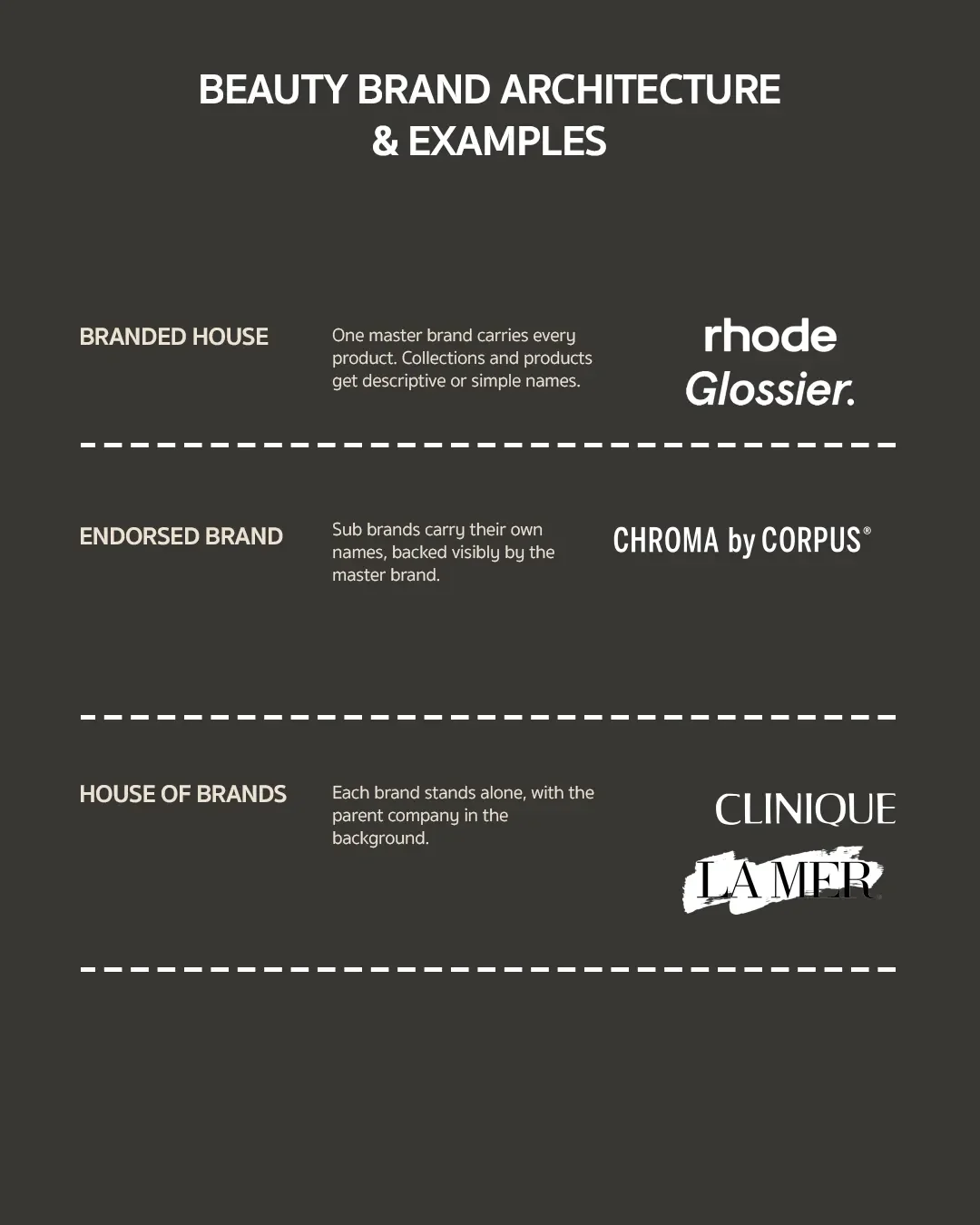
For a founder led beauty brand, the branded house is the right starting point in most cases. It concentrates awareness in one name and keeps marketing spend working in one place. A house of brands suits a group with the budget to build several identities, and it rarely suits a young brand.
The sub brand sits between the first two models. It has its own name and personality and stays visibly linked to the parent. The sections below explain when that extra layer is worth the cost.
Why the Hero Product Shapes Your Architecture
Your hero product is the item customers know you for. It carries most of your reputation and usually most of your revenue, so architecture decisions should protect it.
Three questions help here:
Does the hero product's name work as a base for a wider collection?
Does the brand name carry the hero, or does the product name carry the brand?
Is the hero tied to one concern, one ingredient or one format?
A brand known for a barrier repair cream can grow into a barrier repair collection with a cleanser, a mist and a serum. The collection name comes from the promise the hero has already proven, which makes each new product easier to believe. A hero named too narrowly, such as after one ingredient in one format, leaves the brand with nowhere to go.
How to Organize a Growing Beauty Product Portfolio
Choose one main logic for grouping products and apply it to every item. The common options are:
By concern, such as dryness, pigmentation or sensitivity
By routine step, such as cleanse, treat and moisturise
By ingredient, such as vitamin C or retinol
By skin type or hair type
By body area, such as face, body, scalp or hair
Pick one as the first level and use a second as a filter on the website. Mixing logics at the same level creates confusion. A range with a Hydration collection, a Vitamin C collection and a Sensitive Skin collection places a concern, an ingredient and a skin type side by side. The customer cannot tell which one to choose.
SKU logic is the second half of portfolio organisation. A SKU is each size, shade or variant of a product. Decide early how these are named: sizes appear in the product description and stay out of the product name, shades follow one naming pattern, and travel sizes share the name of the full size product. As your line expands, establishing a cohesive skincare packaging system for multiple SKUs will ensure this structural logic translates seamlessly to your physical boxes. A short internal SKU code that shows category, product and size will save your team and your retail partners a lot of time later.
Skincare Product Naming System: Brand, Collection and Product Names
A clear naming system gives each level one job.
Brand name. This is your identity. It needs to be memorable and wide enough to cover categories you may enter later.
Collection name. This communicates a promise or a concern. Good collection names are words a customer can say out loud and type into a search bar. They need to be broad enough to hold four to eight products over time.
Product name. This states format and function in plain words, such as Gel Cleanser or Daily Mineral SPF. Descriptive product names help search, help retail staff and help customers build a routine. Invented product names work well in colour cosmetics, where Glossier's Boy Brow is a good example, while skincare customers usually want to know what a product does before they care what it is called.
When naming collections, keep these checks in mind:
Avoid names tied to a passing trend or ingredient fashion
Keep medical or results claims out of names, because rules differ between markets
Run trademark checks in every market you plan to sell in before committing
Make sure the name still works if you add a second category
Should Skincare Products Use Collections or Sub Brands?
Most skincare brands should use collections. A collection groups products under the master brand and shares its name, identity and customer. A sub brand adds a separate name, personality and often a separate audience.
Use collections when the products share the same customer, price tier and brand promise. Consider a sub brand when any of those three change.
The cost difference is large. A collection needs a naming decision and some visual variation. A sub brand needs a new identity, new content, a new launch and a new story to build. Founders often reach for a sub brand too early because a new name feels like a bigger launch. Collections deliver most of the same organisation for a fraction of the work.
When Should a Beauty Brand Create a Sub Brand?
Create a sub brand when at least two of these conditions are true:
Different customer. The product serves a clearly separate audience, such as professional clinic clients or men's grooming.
Different price tier. An accessible line sits beside a luxury line, and sharing a name would weaken both.
Different category credibility. A skincare brand moves into fragrance or colour, where customers may not trust the parent name.
Different channel. A salon or clinic range sits beside a direct to consumer range.
Different voice. The new line needs a tone that would dilute the main identity.
Then check resources. A sub brand needs its own content, launch budget and audience building. If your team cannot support two brand stories at once, a collection is the safer choice, and you can revisit the sub brand once the main brand is stable. Whether managing a single master brand or a growing portfolio, document these styling and positioning rules in your official beauty brand guidelines to keep your messaging consistent across every channel.
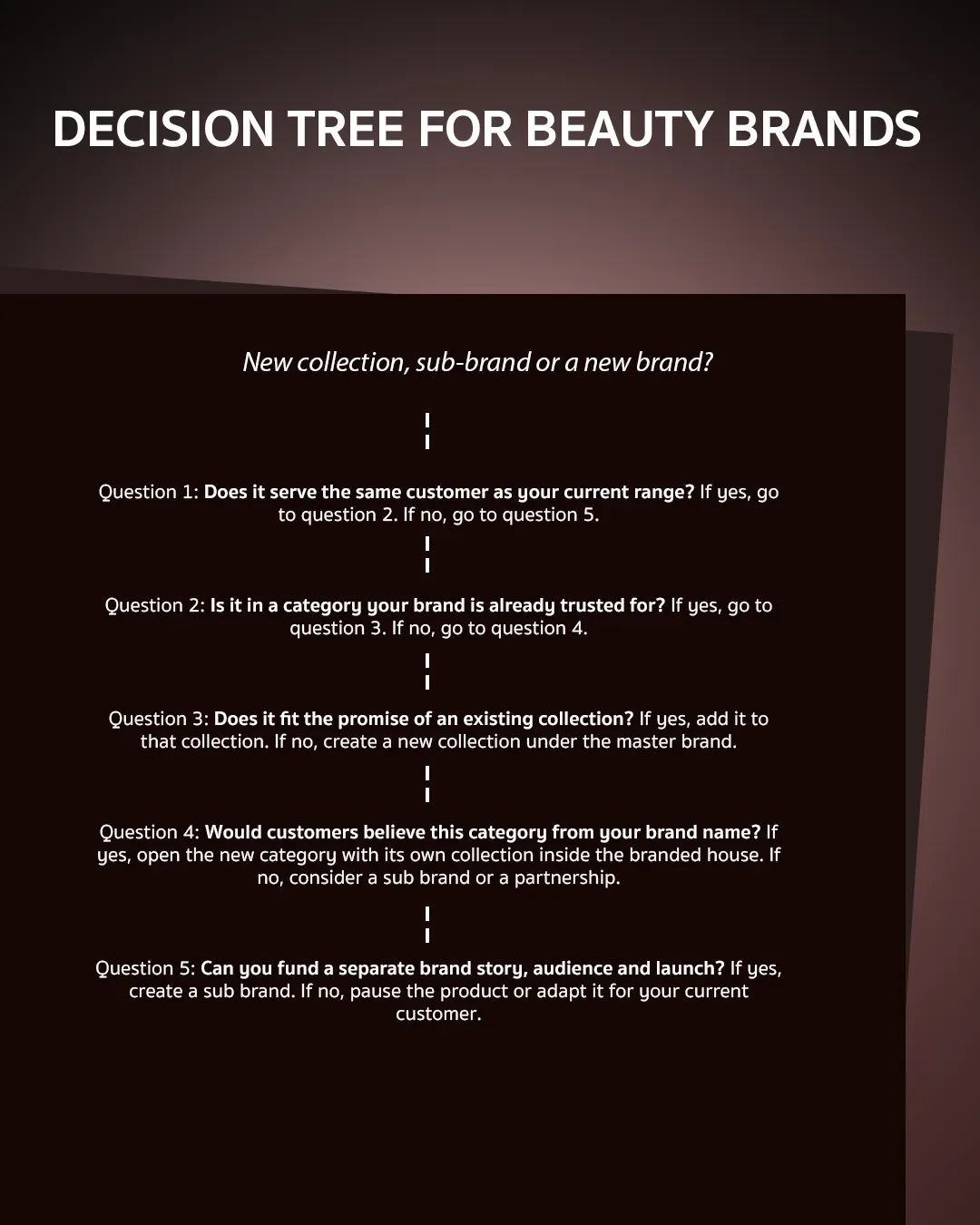
Portfolio Decision Tree: Where Does a New Product Belong?
Run every new product through these questions in order.
Example Beauty Brand Hierarchy
Here is how the layers sit together for a fictional brand called Solenne.
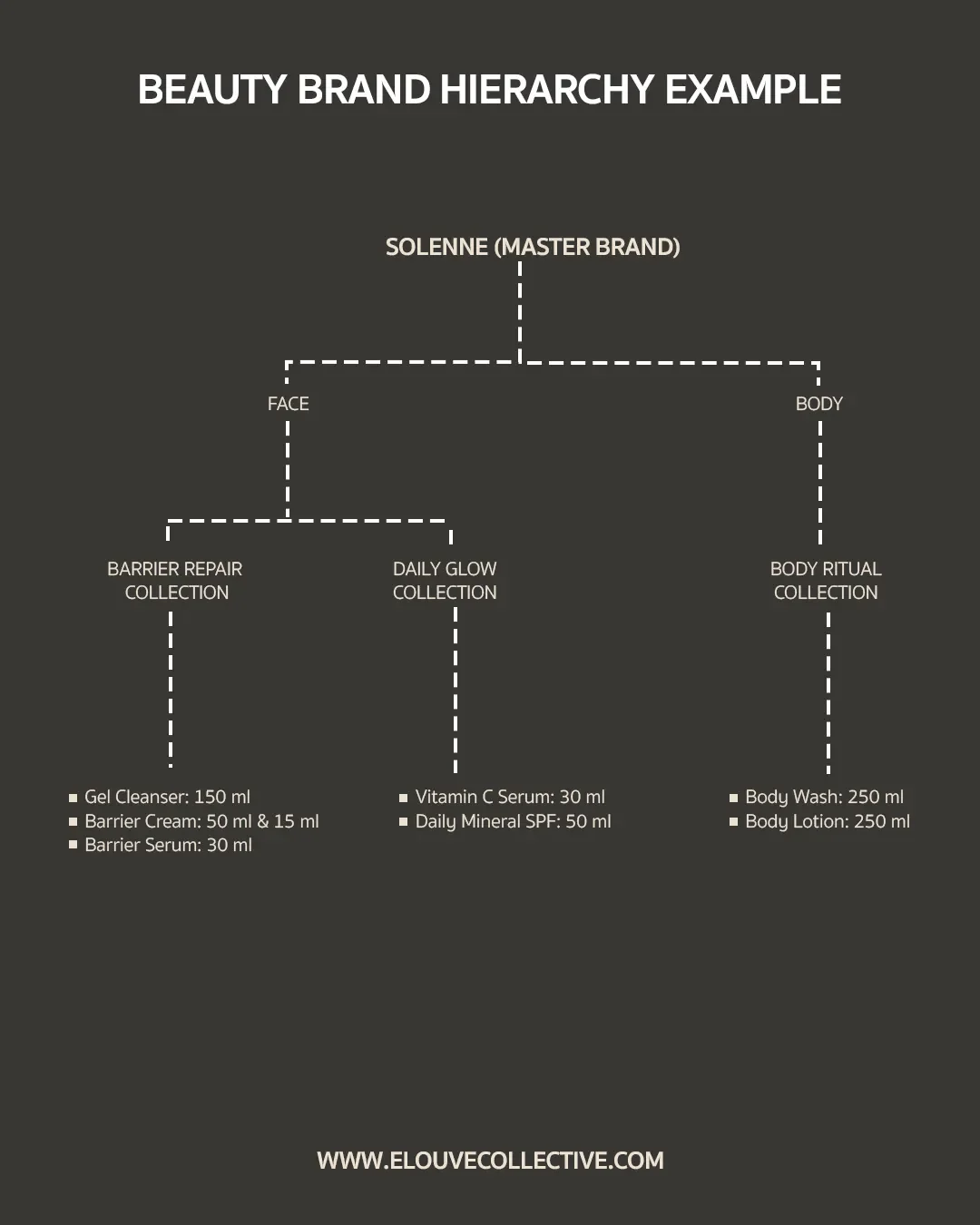
The master brand sits at the top and carries the trust. Categories organise the range by area. Each collection holds products that share one promise. Product names state their function, and sizes live at SKU level. The clinic range stays outside the main structure until the business can support a separate customer, channel and story.
Category Expansion and Future Proofing
Plan for expansion before you need it. A few habits make the difference:
List the categories you may enter over the next three years, even loosely.
Check that the brand name stretches to cover them. A name built around one ingredient or one format will box you in.
Keep collection names broad enough to take new products.
Write a one page architecture brief that records your naming levels, how many collections you plan to run, and the criteria for opening a sub brand.
Review the structure once a year, using real sales and search data.
This brief becomes the reference for your team, your freelancers and your retail partners, so new launches follow the same rules without a fresh debate each time.
What to Decide Before Packaging Design Starts
Packaging design works best when the structure behind it is settled. Confirm these points first:
Master brand name and the categories it covers
The three naming levels: brand, collection and product
A final list of collections, each with a one line promise
Your hero product and where it sits
Product naming format and SKU and size rules
The sub brand decision for the next two years
Trademark checks in your target markets
Once these are agreed, packaging design can focus on how the range looks as a family. That is a separate stage that follows naturally from the architecture work.
Beauty Brand Architecture FAQ
How many products should a beauty brand have before creating collections?
Collections start to help once you have around five or six products that group naturally. Before that, a single range with clear product names is enough.
Can a beauty brand change its architecture later?
Yes, though the cost rises with every launch. Renaming affects packaging, your website, retail listings and customer habits, so a simple structure set early saves money later.
Does a sub brand need its own website and social channels?
A sub brand serves its own audience, so it usually needs its own presence. Many brands start with a dedicated section of the main website and add separate social channels once there is enough content to support them.
What is the difference between a collection and a product line?
A product line is a group of products of the same type, such as several cleansers. A collection groups products across types around one shared promise or concern.
Plan a Scalable Beauty Brand
Elouvé Collective works with beauty founders on brand strategy before design begins, including naming hierarchy, collections, sub brand decisions and a growth plan that holds up as the range expands. If your portfolio is growing and the structure needs a clear plan, we would love to hear about it.
