
Luxury Brand Strategy vs Visual Identity: What Comes First and Why It Matters
Table of Contents
- What comes first, brand strategy or visual identity?
- What is the difference between brand strategy and visual identity?
- What Brand Strategy Actually Defines
- What Visual Identity Actually Defines
- The Question Every Luxury Founder Asks Too Late
- Why Brand Strategy Has to Come First
- Do luxury brands need brand strategy?
- What Strategy Has to Decide Before Any Visual Work Starts
- What Happens When Visual Identity Leads
- Can a designer create an identity without strategy?
- How the Two Actually Work Together in Practice
- Signs Your Brand Skipped a Step
- What This Looks Like Done Right
- Where to Start If You're Building or Rebuilding
- FAQ
Quick Answer: Luxury Brand Strategy vs Visual Identity
Brand strategy defines who the brand is for, how it is positioned, what it promises and how it should behave. Visual identity translates those decisions into logo, typography, colour, imagery and a broader brand world. For luxury brands, strategy should lead so premium design expresses a specific market position rather than generic luxury cues.
You brief a designer with three reference brands you love, a Pinterest board, and a vague sense of "elevated but approachable." Eight weeks later you have a gorgeous identity. Then you try to write the About page and realise you cannot explain, in one sentence, why a customer should choose you over the brand sitting next to you on the shelf. The visuals arrived before the answer did.
This happens to almost every founder building a premium brand for the first time, and it is rarely caught until the identity is already paid for. If you are navigating this shift yourself, partnering with a dedicated luxury-branding-agency can help establish the foundational architecture before any design begins.
Difference Between Brand Strategy and Visual Identity at a Glance
What comes first, brand strategy or visual identity?
Brand strategy comes first, always. It defines positioning, audience, promise, and personality. Visual identity comes second, translating those decisions into a logo, colour palette, typography, and the broader brand world a customer sees and feels.
What is the difference between brand strategy and visual identity?
Brand strategy is the reasoning behind a brand. Visual identity is the expression of that reasoning.
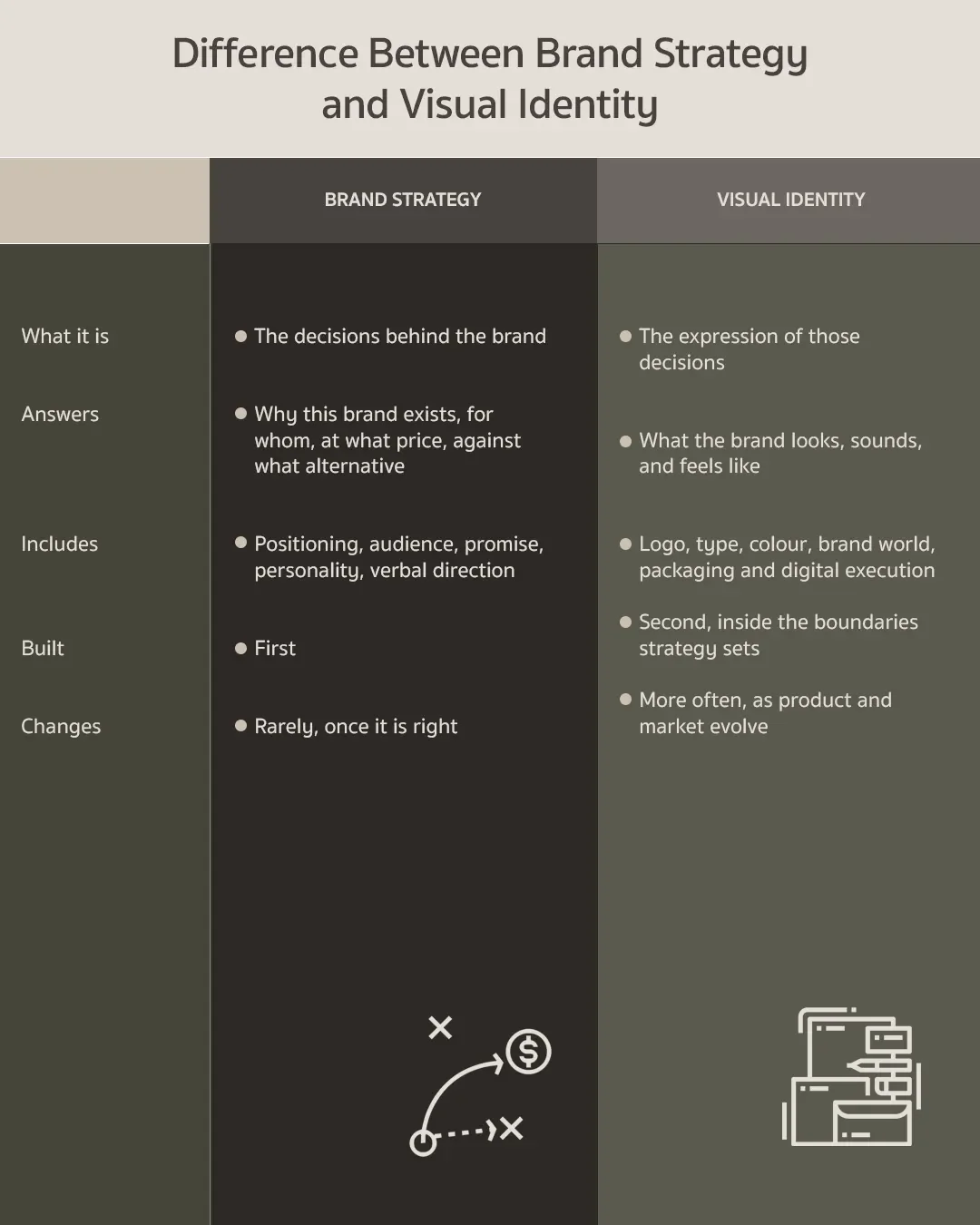
Brand strategy versus visual identity comparison
What Brand Strategy Actually Defines
Brand strategy answers five questions before a single visual exists.
Positioning sets where the brand sits in its category and what it is being compared against. o see a detailed breakdown of how to build this out, refer to our beauty-brand-positioning-framework to map your audience and competitive edge. Audience defines who the brand is for, and just as importantly, who it is not for. Promise is the specific value the brand delivers that a customer cannot get elsewhere, stated plainly enough to guide every decision that follows. Personality places the brand somewhere between restrained and expressive, classic and disruptive. And verbal direction sets the tone of language the brand uses everywhere, from packaging copy to a founder's Instagram caption, so the brand sounds like one thing rather than three different people wrote it.
Together, these five decisions become the brief that everything visual has to answer to.
What Visual Identity Actually Defines
Visual identity is the sensory translation of strategy. It includes the logo, typography, and colour system, the elements most founders think of first. But it also includes the brand world: the photography style, the textures, the spatial language, the mood a customer feels before reading a single word.
Once that world is defined, it becomes the handoff into packaging and digital, meaning the system a packaging designer or web developer works from rather than reinventing the brand on every new touchpoint. This is where a lot of luxury brands quietly fall apart. The logo is consistent, but the packaging photography, the website imagery, and the social content all feel like separate decisions rather than one brand world applied consistently.
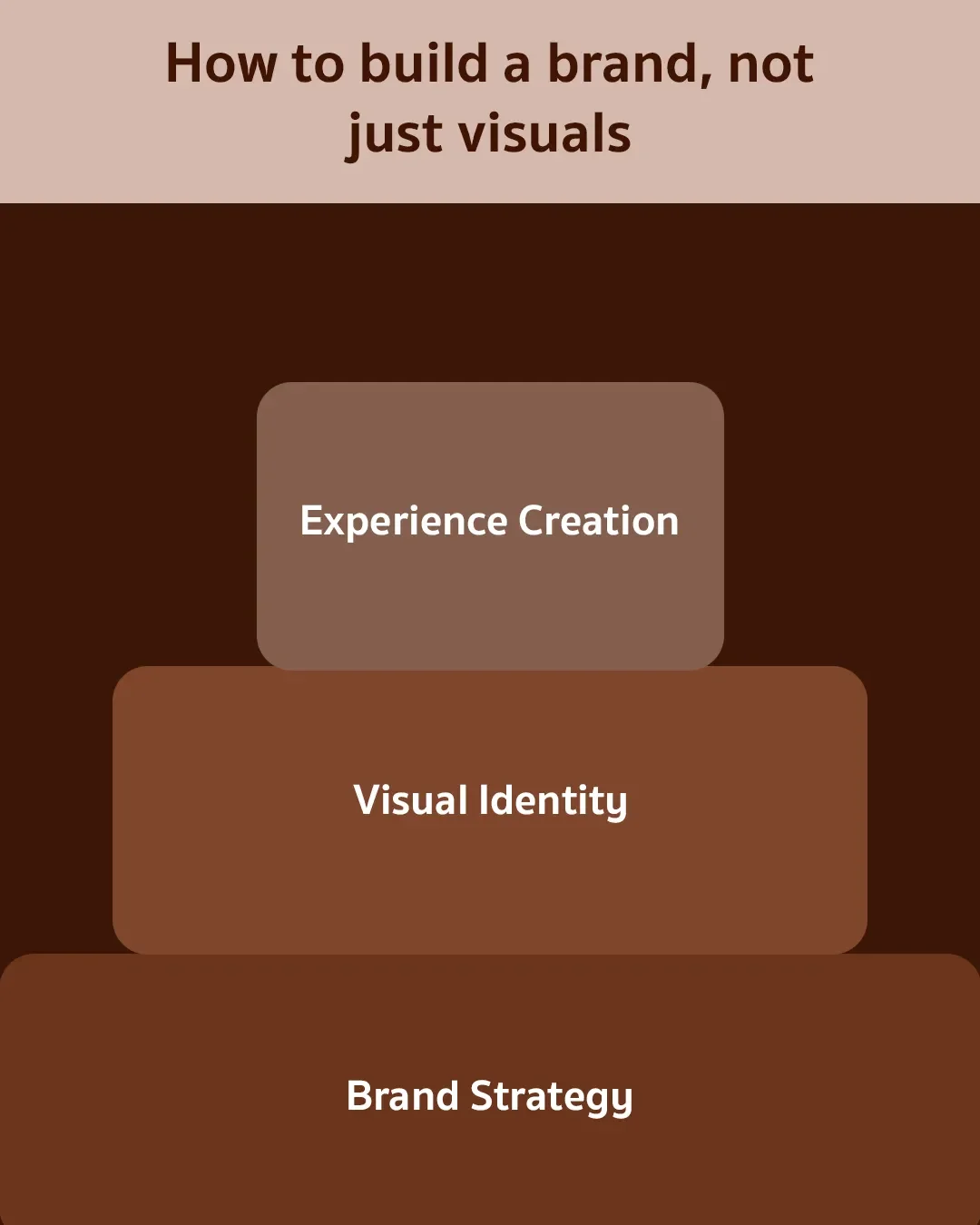
How to build a brand
The Question Every Luxury Founder Asks Too Late
Most founders do not ask whether they need strategy before visual identity. They find out the hard way, usually around month twelve, when the identity they loved at launch no longer matches the brand they have become. The packaging feels disconnected from the price. The tone across the website, the founder's own voice, and the product itself all say something slightly different.
This is not a design problem. It is a sequencing problem. The visuals were built before anyone decided, in writing, what the brand was actually for.
Why Brand Strategy Has to Come First
Brand strategy is the argument. Visual identity is the evidence.
A designer cannot choose a palette that communicates quiet luxury if no one has confirmed the brand is positioned as quiet luxury rather than maximalist or accessible luxury adjacent. A typeface cannot signal heritage if the brand has not decided whether heritage is even part of its promise. Without strategy, a designer defaults to what looks premium in general, rather than what is true for this specific brand, this specific customer, and this specific price point.
Do luxury brands need brand strategy?
Luxury brands need it more than most. Price alone does not create luxury perception. A high price without a clear promise and personality behind it reads as expensive, not exclusive, and customers notice the difference even when they cannot articulate it.
What Strategy Has to Decide Before Any Visual Work Starts
Before a mood board is built, strategy needs to settle:
Category position, and what the brand is realistically being compared against.
Competitive whitespace, the specific gap the brand fills rather than a general sense of premium.
Customer psychology, what the customer is actually buying beyond the product itself.
Promise and personality, stated clearly enough that two different designers would land on a similar direction.
Verbal direction, so tone of voice is set before copywriters and designers start working in different directions.
Skip these, and a designer is not designing a brand. They are designing a mood, with no way to know if it is the right one.
What Happens When Visual Identity Leads
Can a designer create an identity without strategy?
A designer can create something that looks finished without strategy. What they cannot create is something that performs, because there is no positioning to design toward and no promise to make visible.
Consider a beauty brand that hired a designer before any strategic work. The result looked expensive: clean typography, restrained palette, glass packaging, the visual language of every quiet luxury brand at that moment. But the pricing suggested premium while the messaging, written separately, leaned playful and accessible. Customer acquisition ran through high volume influencer gifting, a strategy built for reach rather than exclusivity. Nothing about the business model matched the story the packaging told, and the brand photographed well while converting poorly.
A hospitality example follows a similar pattern. A boutique hotel commissioned a bold, editorial identity before defining its guest profile or its promise beyond the property. The visuals suggested a design forward, younger crowd. The actual guest base, drawn in through the location and price point, skewed older and more traditional. The mismatch showed up in reviews long before it showed up in a rebrand brief.
How the Two Actually Work Together in Practice
Sequencing does not mean strategy finishes completely before identity begins. In practice, the two move in close proximity, with strategy setting the boundaries and identity operating inside them.
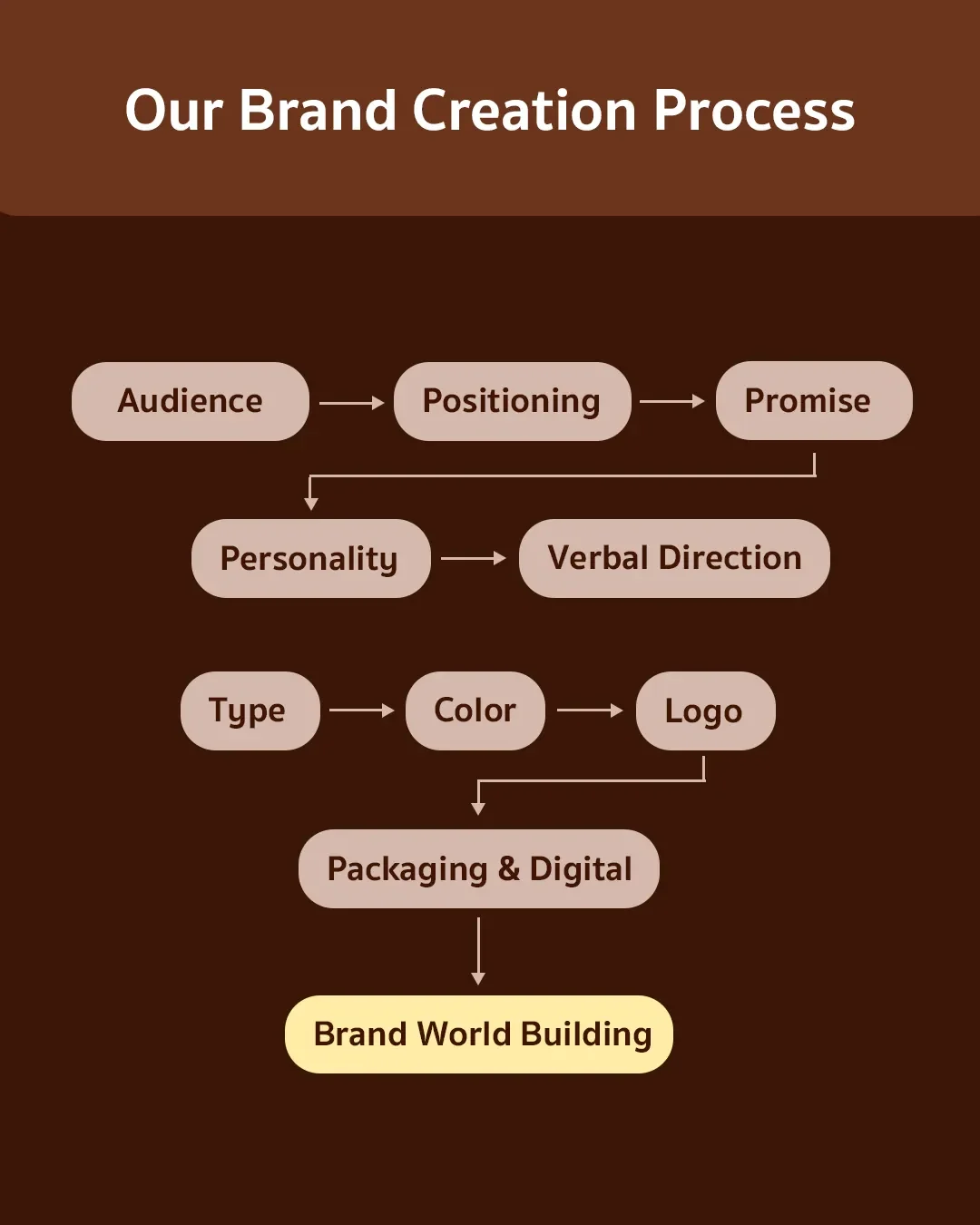
Luxury brand strategy to visual identity project sequence
Once the left half of that sequence is locked, a designer has something real to design against. As identity work progresses, it often sharpens the strategy further, since seeing a direction visually can reveal whether a positioning idea actually holds up. What does not work is running both sides in parallel with no strategic foundation, where design decisions are made on instinct and strategy is written afterward to justify them.
Signs Your Brand Skipped a Step
Your identity gets compliments, but conversion does not match how premium it looks.
Tone of voice shifts noticeably depending on who wrote a given piece of content.
Pricing feels difficult to justify even to yourself, let alone to a customer.
Every campaign introduces a slightly different version of the brand.
You have rebranded more than once in under two years without a clear strategic reason.
Any single sign on its own is not alarming. Several together usually point to strategy that was never fully defined before the visuals were built.
What This Looks Like Done Right
Aesop's restraint is not a design preference. It is a direct expression of a strategy built on clinical minimalism and apothecary credibility, and every packaging decision reinforces that argument. Rhode's soft, near clinical simplicity mirrors a promise built around skin first positioning, aimed at a customer who wants proof before beauty. The Row's near total absence of visible branding is a strategic choice for a customer who values quiet signaling over logos. Aman's spare, almost administrative visual identity matches a promise built on discretion as the actual product being sold.
In each case, visual identity is doing exactly what strategy told it to do. Nothing about it is decorative.
Where to Start If You're Building or Rebuilding
The entry point is strategy, whether you are working with an agency or building the brand yourself. That means defining positioning, audience, promise, personality, and verbal direction before a single design concept is presented, even when it feels slower than jumping straight to visuals. Before committing to a partner, read our guide on how to choose luxury branding studio to ensure they prioritize strategy before aesthetics.
Build strategy before the brand system. Everything downstream, from the logo to the packaging to the way your website reads, performs better when it is built on a foundation rather than a guess.
FAQs: Luxury Brand Strategy vs Visual Identity
What comes first, brand strategy or visual identity?
Strategy. It defines positioning, audience, promise, and personality, which visual identity then translates into logo, colour, type, and brand world.
What is the difference between brand strategy and visual identity?
Strategy is the reasoning behind a brand. Visual identity is the visible expression of that reasoning across every touchpoint.
Do premium brands need brand strategy?
Yes, arguably more than mainstream brands, since price alone does not create the perception of exclusivity without a clear promise behind it.
Can a designer create an identity without strategy?
They can create something that looks finished, but without a positioning to design toward, there is no way to know if it is the right identity for the brand.
Conclusion
The founders who rebrand every eighteen months are not bad at design. They skipped the step that would have made the design last. Brand strategy is not a formality before the fun part starts. It is the argument that gives visual identity something true to say.
If your brand is still running on instinct instead of a defined strategy, that is the gap to close before you touch another moodboard. Elouvé Collective builds brand strategy first, then carries it through visual identity, packaging, and digital, so nothing gets designed on a guess. Book a discovery call to see where your brand actually stands before you commit to another round of visual
