Boutique Hotel Branding: A Clear Guide for New Owners
Every boutique hotel builds a reputation, whether intentionally or not. Over time, people start associating certain feelings, experiences, and memories with it. And once that perception is formed, you don’t fully control it anymore. What you can control is what shapes it in the first place.
That is where boutique hotel branding comes in.
It is not just about how your hotel looks, but how it is understood, remembered, and talked about by the kind of travellers you actually want to attract. In this article, what actually is boutique hotel branding, how to approach boutique it the right way, when it makes sense to bring in a hotel branding agency, and the common mistakes new owners make early on.
What Is Boutique Hotel Branding?
Boutique hotel branding is the intentional creation of a hotel's identity, personality, and guest experience. It brings together strategy, design, storytelling, and hospitality to create a property that guests instantly recognise, connect with, and remember.
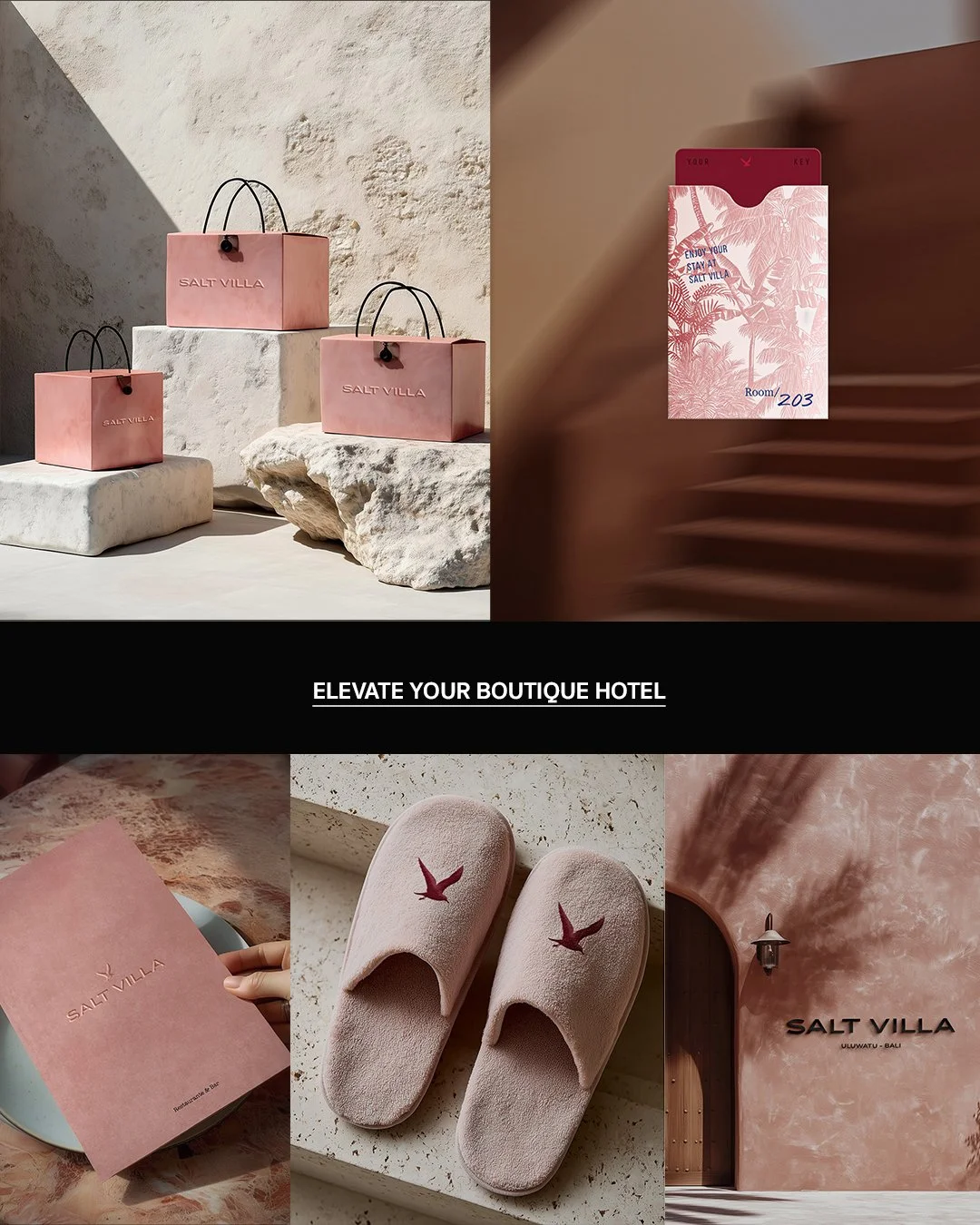
A signature color palette makes every guest touchpoint instantly recognizable.
How Boutique Hotel Branding Is Different From Logo Design
Branding your boutique hotel is far more than designing a logo, the colour palette, or the font choice. Branding is the feeling your hotel leaves in someone’s mind after they’ve seen your website, walked through your space, and left the property. A logo is just identification. It helps someone recognise you, nothing more. You can change a logo and the hotel can still feel exactly the same. But you can also change everything around the logo and suddenly the hotel feels completely different.
That is the difference most new hotel owners miss. A logo sits inside branding. It does not define it.
Branding is what makes a guest say, “I get what this place is about” even before they’ve booked.
We’ve further broken down the difference between logo designer and hospitality branding agency if you’d like to learn more
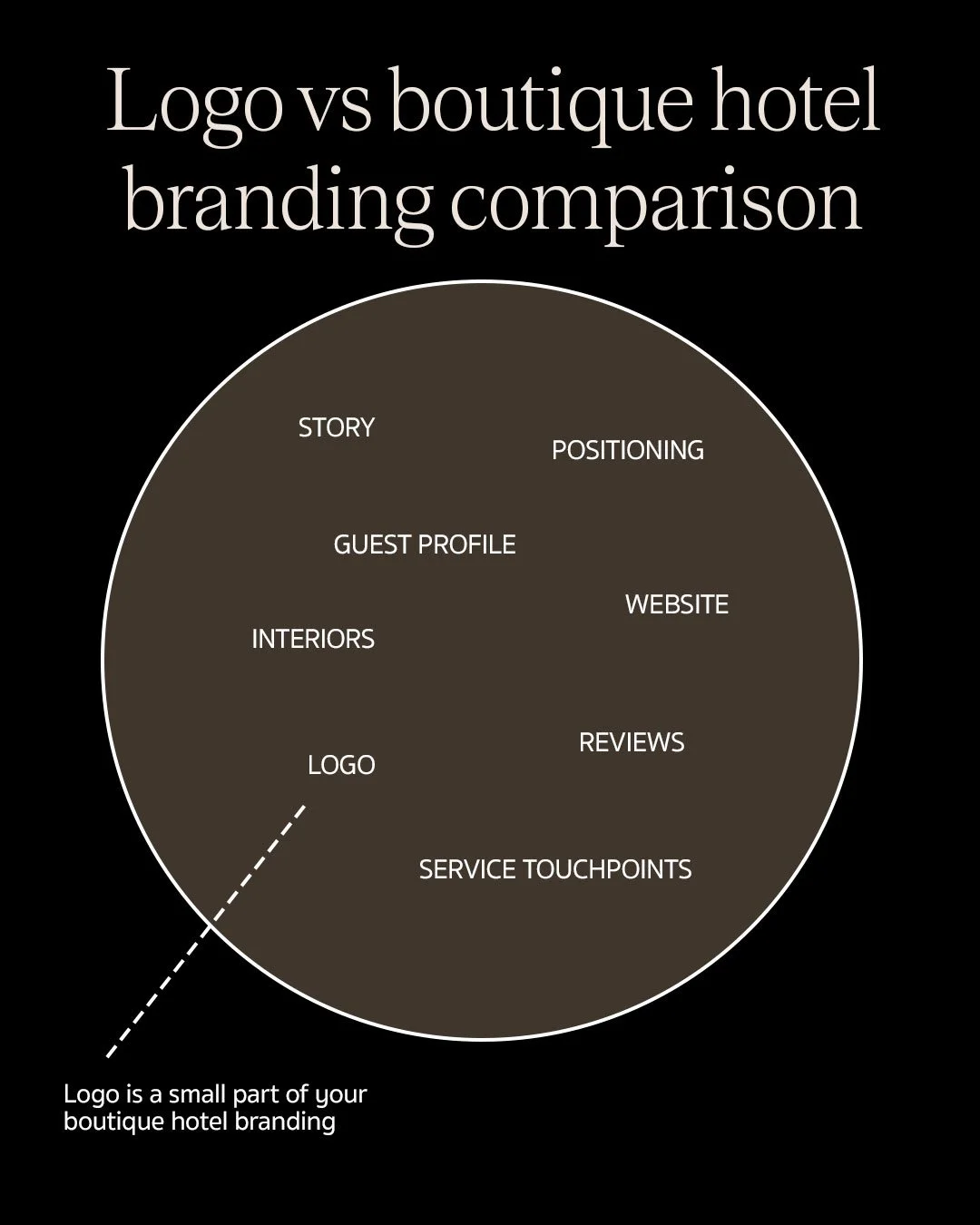
The branding ecosystem: Your logo is just the starting point of a complete hotel identity.
How Boutique Hotel Branding Differs From Luxury Hotel Branding
While boutique and luxury hotels can both offer exceptional service and premium experiences, the way they build their brands is often fundamentally different.
Luxury hotel brands are usually built around consistency. Whether a guest checks into one of their properties in Tokyo, London, or New York, they expect a familiar level of service, amenities, and refinement. Much of the trust has already been established through the brand's reputation, allowing guests to book with confidence because they know what to expect.
Boutique hotels operate differently. Most don't have decades of brand equity or global recognition to rely on. Instead, they compete by creating experiences that feel distinctive, personal, and deeply connected to a particular lifestyle or point of view.
A boutique hotel isn't trying to appeal to every traveller. It is often designed around a very specific audience. It might attract architecture enthusiasts, wellness seekers, surfers, food lovers, remote workers, or couples looking for a slower, more intimate escape. That focus gives boutique hotels far more creative freedom to shape an identity that larger hotel groups often can't.
This freedom extends far beyond visual identity. Boutique hotels can experiment with storytelling, interiors, local culture, guest rituals, partnerships, food concepts, and even the smallest details of the stay to create an experience that feels impossible to replicate elsewhere. Rather than following a global brand standard, they have the opportunity to build a world that is entirely their own.
The guest's motivation is different as well. People often choose a luxury chain because they want predictability. They know the quality of the room, the level of service, and the overall experience before they arrive. Guests choose boutique hotels for almost the opposite reason. They're looking for discovery, character, and a stay that feels unique to that destination rather than interchangeable with somewhere else.
That is why boutique hotel branding carries a different responsibility. It isn't simply about making the property look premium. It is about creating a compelling identity that gives people a reason to choose this hotel over every other independent property in the area.
How to Do Boutique Hotel Branding the Right Way
A boutique hotel branding agency can help uncover what makes your property unique, translate those differentiators into a compelling visual identity, and create a cohesive guest experience across every touchpoint.
Identify Your Ideal Guest
Before thinking about logos, interiors, or even naming, you need to get extremely clear on who your hotel is actually for.
Not “travellers.” Not “everyone.” A very specific type of guest.
A boutique hotel designed for digital creatives visiting Lisbon should not feel the same as a quiet countryside stay built for couples escaping city life. The atmosphere, energy, service style, and branding decisions should come from completely different places.
The goal is to understand what kind of person should naturally feel drawn to your space.
Are they looking for calm and privacy? Social energy and community? Luxury without formality? Cultural immersion? Wellness and slow living?
Once that becomes clear, decision making becomes much easier. The music in the lobby, the photography style, the scent inside the rooms, the tone of your website copy, even the type of furniture you choose all begin aligning naturally.
Without this clarity, many hotels end up looking polished but emotionally generic. They may attract attention, but not the right guests.
A strong hotel brand isn’t build upon guesswork. It’s vital to understand the the exact hotel branding process we follow with our clients
Define What Makes Your Property Worth Choosing
Every hotel likes to say it offers a “unique experience.” Very few can clearly explain why someone should choose them over the property next door.
This is where hotel’s brand positioning matters. And it will help you differentiate your boutique hotel from luxury chainin the neighbourhood
Your differentiators are not just amenities. They are the specific reasons a guest remembers your hotel, talks about it, or feels emotionally drawn toward booking it in the first place.
Sometimes the advantage is physical. Maybe your hotel has a rooftop overlooking the city, a beautifully designed courtyard, a café that locals genuinely visit, or rooms flooded with natural light. But often, the strongest differentiators are emotional and atmospheric.
The important thing is identifying what your property genuinely owns instead of copying what every other hotel is already saying.
Once you understand that, your branding becomes much sharper. You stop trying to appeal to everyone and start building a clear reason for the right guests to care.
Shape the Direction Before You Design Anything
One of the biggest mistakes in hotel branding is jumping straight into visuals before defining the actual feeling of the experience.
Good branding is not built by collecting references and choosing colors randomly. It starts by deciding how the hotel should emotionally feel when someone walks through the doors.A boutique hotel targeting wellness travellers might lean into soft lighting, natural textures, muted tones, and slower pacing throughout the experience. Meanwhile, a hotel designed around nightlife and social energy may use bolder visuals, louder communal spaces, and more expressive branding choices.
Neither direction is right or wrong. The problem happens when there is no clear direction at all. This stage acts as the foundation for every future decision. Interiors, visual identity, tone of voice, uniforms, signage, even the way staff interact with guests should all feel like they belong to the same world. When the emotional direction is unclear, hotels often end up feeling visually disconnected.
Build the Language of Your Hotel (NAME, TONE, MESSAGING)
Once the direction of the hotel feels clear, the next step is giving that world a voice. This is where naming, messaging, and tone begin shaping how people perceive your hotel before they ever experience it physically.
A name that feels minimal and elegant creates a very different expectation compared to one that feels artistic, tropical, nostalgic, or culturally rooted. The same applies to taglines, website copy, room descriptions, menus, and social captions. Every word either strengthens the brand world or weakens it.
This is often where hotels accidentally become generic. They use the same phrases everyone else uses. “Luxury stay.” “Exceptional hospitality.” “Your home away from home.” None of these actually say anything memorable.
Strong hotel branding sounds specific. It creates imagery, emotion, and anticipation.Turn Your Brand Strategy Into Visual Identity System
Once the strategy is clear, the visuals finally have something meaningful to build from. This is where most people think branding begins, but in reality, visual identity is simply the translation of everything you have already defined. Your audience, positioning, atmosphere, and personality now start becoming visible.
This includes elements like your logo, typography, colors, photography style, packaging, and design direction. But strong hotel branding goes much deeper than creating something that merely looks attractive. The important part is consistency.
The visual identity of your boutique hotel should help every future touchpoint feel connected, whether someone is viewing your Instagram page, checking into the lobby, opening a room menu, or walking through the hallway. Nothing should feel like it belongs to a completely different hotel.
Good hotel visual identity systems also make future decisions easier. Instead of redesigning things from scratch every time, the hotel develops a recognizable visual language that can guide interiors, signage, printed materials, digital presence, and even future expansion.
That is when branding starts feeling intentional instead of decorative.
Translate Your Visual Identity Into an Immersive Brand Experience
This is the moment where branding stops living on a moodboard and starts existing in the real world.
Guests don’t experience your brand as a logo or a guideline document. They experience it through small, physical interactions that happen throughout their stay.
A well branded boutique hotel makes this feel almost invisible. The guest is not thinking about “branding,” but everything they touch quietly reinforces the same story.
It can be as simple as the weight and design of a key card, the way a menu is printed and folded, or how a welcome note is placed in the room. Even the choice of glassware in a minibar or the design of a door hanger becomes part of the experience.
Think of a coastal boutique hotel where every touchpoint subtly reflects its environment. Linen textures, handwritten style signage, simple ceramic trays for amenities, and soft printed materials all reinforce the same calm, coastal feeling. Nothing feels forced, but everything feels intentional.
On the other hand, a city boutique hotel focused on nightlife and energy might use sharper materials, bold contrast in printed collateral, expressive signage, and more dynamic in room details that feel slightly unexpected.
The key is that none of these touchpoints should feel random or decorative on their own. They are all small expressions of the same brand system. When done well, guests may not consciously notice every detail, but they feel the consistency. And that is what creates memorability.
Extend the Experience Into Your Digital Presence
For most guests, the experience of a hotel starts long before they arrive at the property. It starts on a screen.
This is why your digital presence should never feel like a separate layer of marketing. It should feel like a continuation of the same physical experience you are promising.
Your website, for example, is often the first real “visit” someone has with your hotel. If your property is calm and minimal in real life, but your website feels cluttered, loud, or generic, you immediately break trust. The guest senses a disconnect before they even book.
The same applies to social media. It should not behave like a promotional feed of room photos. It should communicate atmosphere. A sense of lifestyle. A feeling of what it is like to exist inside the hotel.
Even functional touchpoints like booking confirmation emails, check-in instructions, or pre-arrival messages matter. A well designed hotel uses these moments to continue the emotional narrative instead of treating them as transactional communication.
When the digital presence aligns with the physical experience, guests arrive with the right expectations. And that alignment is what makes the experience feel seamless instead of surprising in the wrong way.
Make the Interior Design Part of the Brand
Interior design is often treated as a separate discipline from branding, but in boutique hospitality, they are inseparable.
The moment a guest walks in, they are not looking at “design choices.” They are stepping into a brand world that should already feel familiar based on everything they’ve seen and read before arrival.
This is where many hotels lose coherence. The branding feels refined online, but the interiors follow a different logic, often driven by trends, budget decisions, or disconnected design references. A strong boutique hotel avoids that split.
Brand Touchpoints That Guests Actually Notice
Every interaction a guest has with your hotel shapes how they remember it. Some of these moments are obvious, like your interiors or website. Others are so subtle they're almost invisible. Yet together, they create the overall impression guests leave with.
The strongest boutique hotels don't rely on one memorable feature. Instead, they create consistency across dozens of touchpoints that all reinforce the same story. Individually, these details might seem insignificant. Collectively, they become the experience people talk about long after they've checked out.
Website & Booking Experience
Your website is often the first experience guests have with your hotel. The photography, booking journey, copywriting, and overall atmosphere should reflect exactly what they'll experience when they arrive.
Arrival & First Impressions
The entrance, signage, scent, lighting, music, and the way guests are welcomed immediately establish expectations. These first few minutes often shape how the entire stay is perceived.
Guest Rooms
Interiors, amenities, printed materials, minibars, toiletries, robes, room guides, and even the typography on a "Do Not Disturb" sign all contribute to the personality of the hotel.
Food & Beverage
Menus, tableware, presentation, café branding, cocktails, breakfast experiences, and room service all reinforce the character of the property.
Staff Interactions
The language your team uses, the level of formality, uniforms, and service style should feel like a natural extension of the brand rather than separate from it.
Digital Communication
Booking confirmations, pre-arrival emails, check-in instructions, post-stay messages, and social media continue shaping perception long after guests leave your property.
None of these touchpoints create a memorable boutique hotel on their own. Their power comes from consistency. When every interaction reflects the same personality and point of view, guests stop noticing individual details and start remembering the hotel as a complete experience.
Common Mistakes New Owners Make When Hiring a Hotel Branding Company
Selecting the right hotel branding company is crucial influences how successful your property is going to be in future. Avoid these common branding mistakes:
Hiring a Graphic Designer Instead of a Branding Expert
Another frequent mistake is treating hotel branding as a purely visual task and hiring a graphic designer to handle everything from positioning to identity.
This usually happens when a hotel owner thinks branding is just a logo, a color palette, and a nice-looking website.
In reality, a boutique hotel in places like Marrakech or Tulum is not remembered because of its logo. It is remembered because of how the entire experience feels cohesive, from booking to check-in to the final morning coffee in the courtyard.
A graphic designer can absolutely create beautiful visuals. But without strategic direction, those visuals often end up disconnected from the actual guest experience.
You might see a hotel that looks like a luxury wellness retreat online, but once you arrive, the interiors feel like a standard business hotel. Or the opposite. A very experiential space that is visually represented in a flat, generic way online. That disconnect usually comes from skipping the strategy layer entirely.
Asking branding agency to replicate the experience of a hotel they found on Pinterest
This is one of the easiest traps to fall into, especially for first time hotel owners. It usually starts with a Pinterest board full of beautiful boutique hotels. Or a few competitors in the same city that already look successful.
So instead of building a clear identity, you unknowingly build something that’s already been done a gazillion times. Familiarity is not differentiation. And in hospitality, memorability is everything.
Hiring an agency with one design style
Have you ever noticed how the portfolios of some branding agencies all seem to look the same?
Different clients, different hospitality brands, yet somehow every project uses similar colour palettes, typography, textures, and visual treatments. After a while, you start recognising the agency's style more than the brands themselves.
That is often a sign that the creative team is designing through the lens of their own preferences rather than the brand's unique positioning.
A strong branding firm does the opposite. It starts by understanding your vision, audience, and strategic goals, then builds a visual identity around those foundations. The result should feel unmistakably yours, not like a variation of the agency's previous project.
The best hotel branding agencies lead with your vision, not their aesthetic. If every project in a portfolio looks cream, beige, and interchangeable, that's usually a red flag worth paying attention to. The logo is just a recognition point. Not the storyteller.
How to Know When Your Boutique Hotel Branding Is Actually Working
Guests Understand the Experience Before They Arrive
People should already have a clear sense of what your hotel feels like just from your website or social presence. If guests arrive and say “this is exactly what I expected,” your branding is doing its job.
You Attract the Right Kind of Guest
You start noticing a pattern in the kind of people booking your hotel. Not random, but aligned with the experience you designed for. That consistency is a strong signal your positioning is clear.
Price Becomes Less of a Debate
Guests are not constantly comparing you to cheaper options nearby. When branding is strong, people choose you for the experience, not just the price.
People Talk About the Stay, Not Just the Rooms
When guests describe your hotel, they don’t just mention amenities. They talk about the vibe, the feeling, or the experience. That’s when branding has moved beyond design into memory.
You Start Getting Organic Word of Mouth
Guests recommend your hotel to others who are similar to them. Not everyone, but the right people. That’s when your brand starts compounding.
When to Consider Working With a Hotel Branding Agency
When you are launching a new property or reworking an existing one, early branding decisions shape everything that follows, from design to guest perception. Getting a branding firm right at the start of branding/rebranding is far easier than trying to fix them later.
Working with a hotel branding agency is not about outsourcing design. It is about bringing structure and clarity to decisions that define how your hotel is understood.
If you are currently evaluating a hotel branding agency, our in-depth insights may help to understand what to look for before committing.
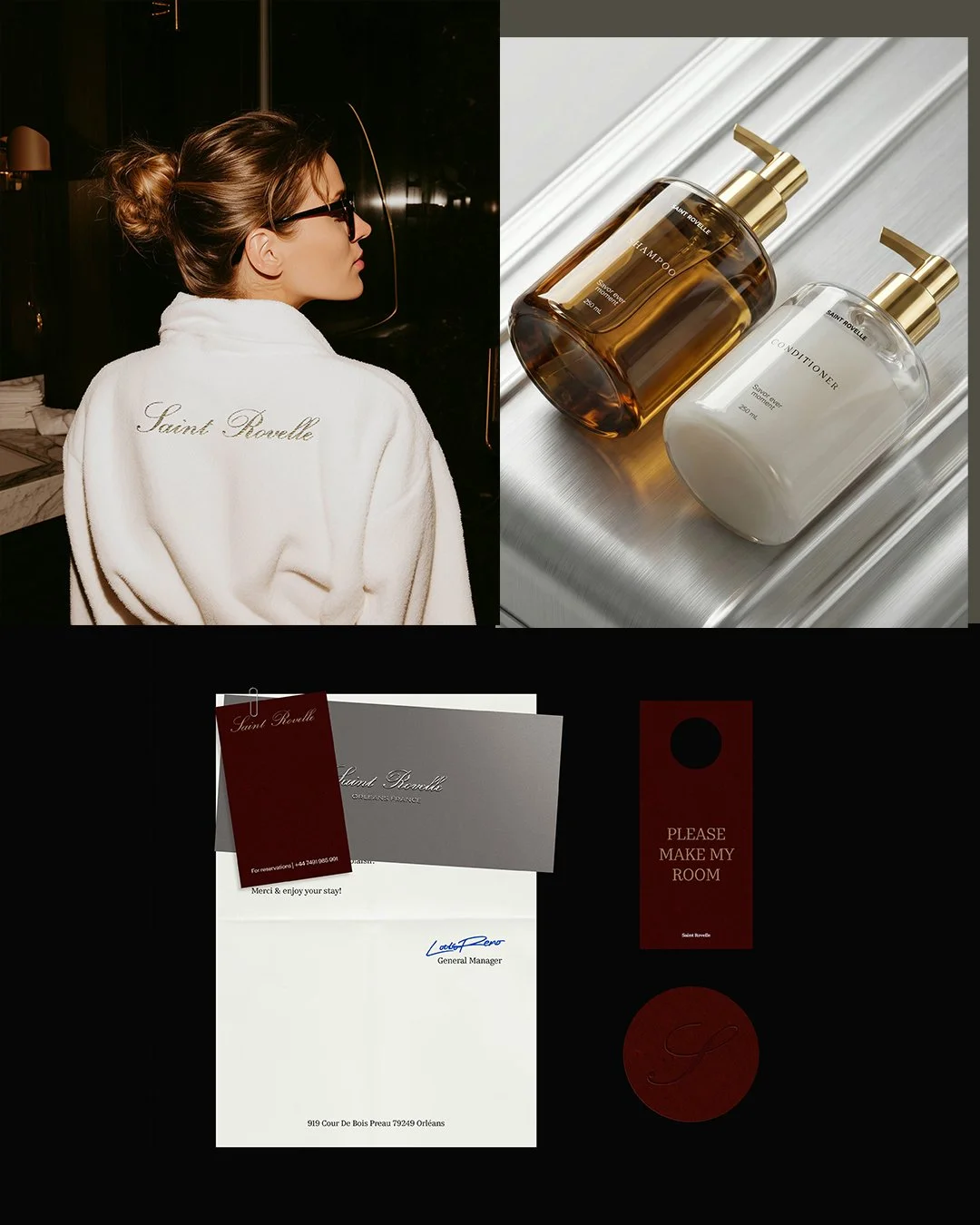
Custom amenities and tailored touchpoints elevate the physical guest experience.
FAQs: Boutique Hotel Branding
What is boutique hotel branding?
Boutique hotel branding is the intentional process of shaping your property’s unique identity, values, and reputation. It goes far beyond a logo, encompassing your interior design, guest experience, service standards, color palette, and storytelling to differentiate your hotel from major corporate chains.
How do boutique hotels build a memorable identity?
Boutique hotels build a memorable identity by anchoring everything in a distinct, authentic story and focusing on physical brand touchpoints. This includes cohesive visual themes, hyper-localized guest experiences, curated in-room amenities, and consistent messaging across your website and social media.
What should new hotel owners define before hiring a designer?
Before hiring a brand designer, new hotel owners must define their target guest profile, core property values, unique selling proposition (USP), and a clear budget. Having a firm grasp of your hotel’s local narrative and operational vibe ensures your designer creates a functional, aligned brand identity.
Why is branding important for a boutique hotel?
Branding is critical because it drives direct bookings, reduces reliance on expensive Online Travel Agencies (OTAs), and allows you to charge premium room rates. A strong hotel brand identity builds emotional connections, turning first-time guests into loyal, lifelong advocates.
What are the key elements of a hotel brand identity?
The core elements include a primary logo and secondary marks, a signature color palette, cohesive typography, a defined brand voice, customized in-room touchpoints (like linens and toiletries), and a digital strategy that mirrors the physical guest experience.
Conclusion: Choosing the Right Boutique Hotel Branding Agency
At the end of the day, boutique hotel branding is not just a design exercise. It is a long-term decision about how your property will be understood and remembered.
The right partner is not the one who makes things look the best on paper, but the one who helps you define a clear direction and carry it through every part of the experience.
If you are at a stage where things feel scattered or inconsistent, getting external perspective can often help align everything into a direction that actually works. If you want to explore how we approach boutique hotel branding, feel free to book a discovery call with us
or just send us an email: hello@elouvecollective.com
Check out more from the blog here.
Follow along for more business tips and tricks on Instagram!